
Keeping a Food Diary: How to Start and Make It Stick
Learn how to keep a food diary that you will actually use: what to write down, paper vs. app, a simple first-week plan and how to read your patterns.
Keeping a food diary means writing down what you eat and drink, ideally as you go, so you can see your real habits instead of the ones you remember. Start with one meal a day, add detail as it feels easy, and review it once a week. Consistency matters more than perfect entries.
This guide covers what to record, how to choose between paper, notes and an app, a simple first-week plan, and how to turn the log into small, realistic changes.
TL;DR
- A food diary is a running log of everything you eat and drink. Its main value is showing patterns you do not notice from memory.
- Record meals right after you eat. Include the food, how it was prepared, how much, and when.
- Use whatever format you will open every day: a notebook, a phone note, a photo or an app.
- Start small, with one meal at a time and rough portions, then build up. Logging often beats logging perfectly.
- If tracking food makes you anxious or rigid, talk to a healthcare professional before continuing.
Table of Contents
- What a food diary is and what it can show you
- What to write down
- Paper, a note or an app: pick what you will actually use
- A simple first-week plan
- Building the habit when you are busy
- How to read your food diary
- Track faster with VeriTrack
- When a food diary is not the right tool
- FAQ
- Sources
What a food diary is and what it can show you
A food diary, also called a food journal, is a daily record of what you eat and drink. Cleveland Clinic describes it as a living document that includes everything: meals, snacks, candy and coffee. People use one for weight management, to spot trigger foods and food sensitivities, and to eat more mindfully.
The real power is in connecting dots. A registered dietitian quoted by Cleveland Clinic explains that a journal helps you see how eating relates to mood, sleep, workouts and focus, and that without tracking you may never make those links.
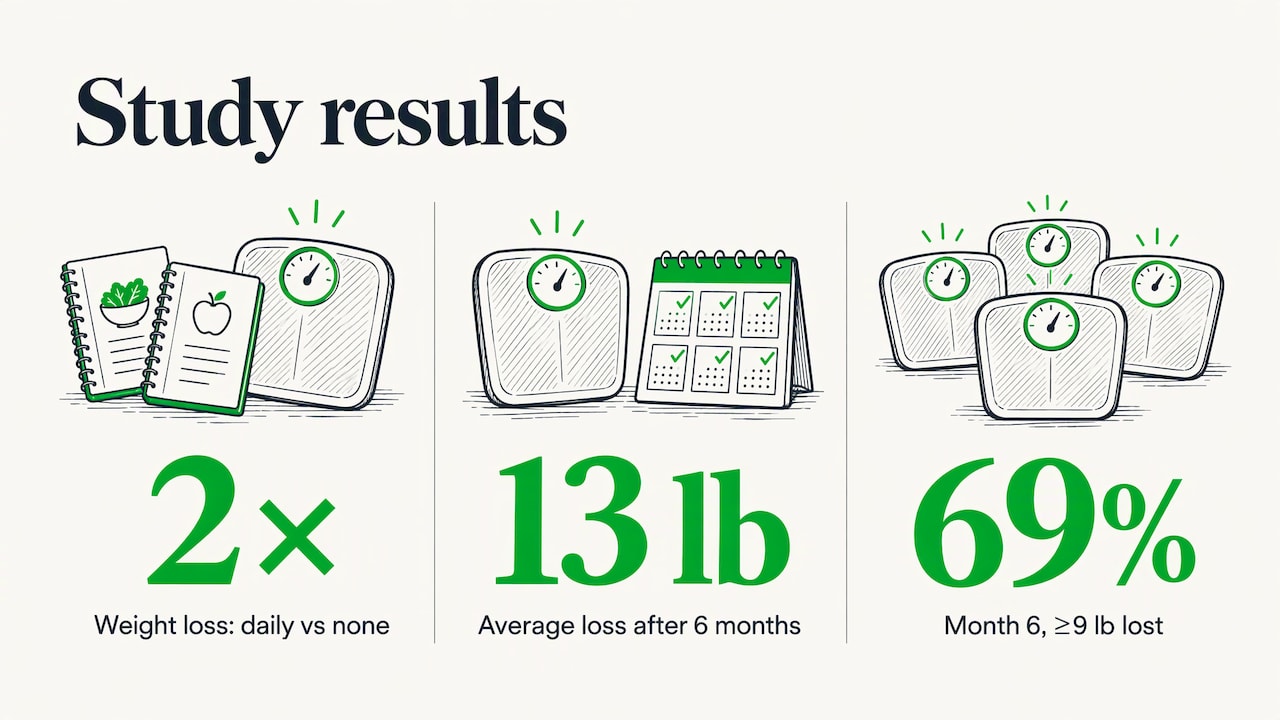
There is research behind the habit too. In a weight loss study of nearly 1,700 participants, people who kept daily food records lost twice as much weight as those who kept none. The researchers at Kaiser Permanente found that how often participants kept their diaries was one of the best predictors of weight loss. After six months, average loss was about 13 pounds, and 69% of participants had lost at least 9 pounds.
That last point is encouraging. It is the frequency of the habit that counts, not flawless entries.
Who it helps
A food diary is useful whether your goal is losing weight, maintaining it, building muscle, eating more vegetables or figuring out why certain meals leave you feeling off. It is also a practical tool if you want to talk to a doctor or dietitian with real information instead of guesses.
What to write down
The more specific the entry, the more useful the diary. Harvard Health says a basic food diary should capture what you eat and drink, how it was prepared, sauces and toppings, how much, and when.
Here is how that looks in practice:
- What: “Grilled chicken sandwich on whole wheat” tells you more than “lunch.” Add the dressing, cheese or toppings.
- How it was made: baked, broiled or fried changes the picture. So does a splash of oil in the pan.
- How much: a household measure, an ounce amount, or a weighed portion if you have a scale.
- When: the time of day shows problem spots such as late-night snacking.
- Context (optional): where you were, who you were with, what else you were doing and how you felt. Harvard Health suggests these extras too.
A splash of oil, a handful of nuts and a second helping all disappear from memory. They are exactly the entries worth capturing.
Estimating portions without a scale
You do not need to weigh everything on day one. Health systems offer simple hand-based shortcuts. Northwestern Medicine’s food diary guide uses these comparisons:
| Food amount | Hand comparison |
|---|---|
| 1 cup | One average-sized fist |
| 1/2 cup | One small scooped handful |
| 3 ounces (meat) | Palm of your hand |
| 1 tablespoon | One thumb |
| 1 teaspoon | Tip of your pointer finger |
Alberta Health Services’ diary adds that 1.5 ounces of cheese is about a thumb, and 2 tablespoons is about a golf ball. These are estimates, which is fine. A consistent rough estimate still reveals trends.
Do not skip drinks, weekends or “small” things
Coffee with cream, juice, a handful of snacks from a shared bowl: they all count. Cleveland Clinic also points out that many people eat very differently on weekends, so include them. UCSF’s wellness clinic suggests that a short three-day food journal should cover two weekdays and one weekend day, picked to reflect your typical eating.
Paper, a note or an app: pick what you will actually use
There is no single best format. The CDC’s Diabetes Prevention Program lists many options: a spiral notebook, spreadsheet, smartphone or computer app, voice recording or a photo of your food. The best choice is the one that takes the least effort at the moment you finish eating.
Here is a quick way to decide:
- Paper notebook: easy to start, good for jotting feelings and context. It works best if you carry it everywhere.
- Phone notes or spreadsheet: always with you and easy to edit, but you do the lookups and math yourself if you want calories or protein.
- Photo log: a quick snap when you eat out is a fast way to capture a meal. Cleveland Clinic suggests it.
- A tracking app: best if you want calories and macros without doing the arithmetic. Look for one that lets you type, speak or photograph a meal, and lets you correct entries.
If you are logging food for someone else, such as a baby starting solid foods, a dated record of each new food and any reaction is the core of the diary. An allergen introduction schedule can give that kind of log some structure.
How to track in stages
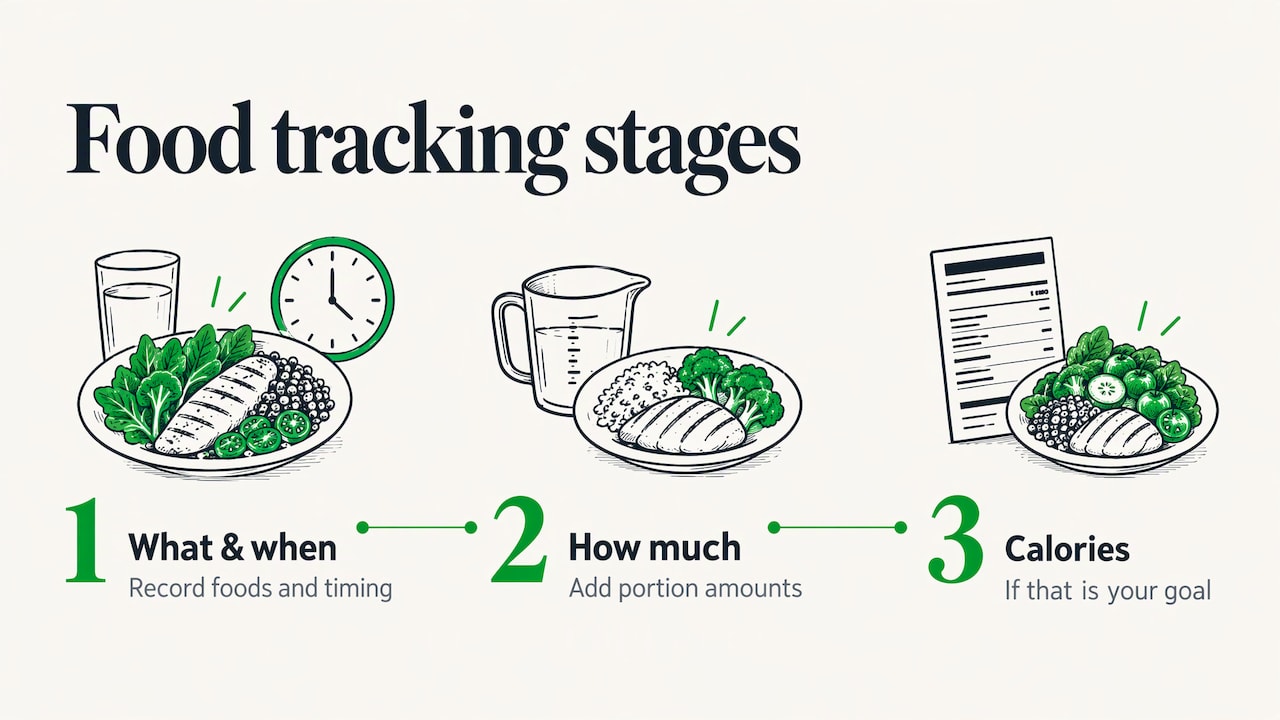
The CDC guide suggests building up gradually: begin by tracking what and when you eat, then add how much, then calories if that is your goal. This staged approach keeps the first week from feeling like homework.
A simple first-week plan
You do not need a perfect system. Try this.
- Choose your tool today. Pick one format and keep it within reach.
- Start with one meal. Cleveland Clinic recommends recording one meal at a time and not requiring exact measurements at first.
- Log right after eating. Harvard Health’s dietitian author says writing food down as soon as you consume it is critical, because later recollection is less accurate.
- Be honest and neutral. Record the cookie as readily as the salad. The diary is data, not a grade.
- Add detail gradually. By midweek, add portions and preparation. By the weekend, add how you felt.
- Include a weekend day. Patterns often hide there.
- Review at the end of the week. Look back for patterns you did not know were there.
If you want to track how you feel, the dietitian quoted by wikiHow suggests waiting 10 to 20 minutes after a meal before noting your fullness, because it takes about 20 minutes for your body to register satisfaction. That is one more reason to jot a quick note rather than judge a meal immediately.
Building the habit when you are busy
The good news for busy people: you do not need much time. The CDC guide says tracking takes just a couple of minutes after each meal. If you forget, it recommends making tracking part of your routine, setting a reminder or timer, or leaving notes where you will see them.
A study of an online behavioral weight loss program found something worth remembering. The most successful participants spent an average of just 14.6 minutes a day on self-monitoring after six months. What best predicted success was how often they logged in, three or more times a day and consistently day after day, not how long they spent or how much detail they included.
So a quick, imperfect entry three times a day can beat a long, detailed entry once in a while. Practical ways to make that happen:
- Attach logging to something you already do: pouring coffee, closing your laptop after lunch, brushing your teeth after dinner.
- Log before you eat when possible, such as snapping a photo of the plate, and finish the details later.
- Keep entries rough on bad days. “Burrito bowl, about 1 cup rice” is better than no entry.
- Do not restart after a miss. Pick up with the next meal. A gap in your diary is not a failure.
- Remember your reason. Write one line on the first page: why you are doing this.
For more on why imperfect tracking still works, see our piece on why calorie tracking works even when you do not do it perfectly.
Our perspective on keeping a food diary
Most people who quit a food diary do not quit because they lost motivation. They quit because logging felt slow, or because they stopped trusting the numbers. A portion you guessed at on Tuesday looks very different from the one you remember on Friday, and once you doubt your log, you stop opening it.
That is why we built VeriTrack around transparency. You can photograph a meal, type it or say it out loud. On supported iPhones, we use LiDAR depth measurement to help estimate portion size, and we draw on USDA data for nutrition. Then we show the assumptions behind each estimate, so you can see what we guessed and correct it in seconds.
We think a good diary should be fast enough to use three times a day and honest enough to trust. It should also be gentle. Our reminders are meant to nudge, not scold, because the goal is a habit you can keep, not a perfect record.
Aliaksei
How to read your food diary
A diary only pays off when you look at it. After a week, sit down for ten minutes and ask questions. Harvard Health suggests these:
- How healthy is my diet overall?
- Am I eating vegetables and fruit every day?
- Am I eating whole grains each day?
- Am I eating foods with added sugar?
- Do my moods affect my eating habits?
- How often do I eat on the run?
HealthLink BC frames the review as learning what, where, when and why you eat. It recommends looking for habits to change or reinforce, then taking small, achievable steps toward your goals.
Turn one pattern into one change
Pick a single finding and act on it. For example:
- You notice most of your snacking happens at 3 p.m. Try moving a protein-rich snack to 2:30.
- You see weekends add far more than weekdays. Plan one or two meals ahead.
- Your vegetables appear at dinner only. Add fruit or a side to lunch.
Changes this small are easier to stick with, and your diary shows whether they worked next week. If you are tracking calories for weight loss, our guide to portion control for weight loss is a natural next step.
Tracking for symptoms
If you are logging to find trigger foods, add detail. For conditions such as IBS, diverticulitis or sensitivities to gluten or lactose, Cleveland Clinic suggests adding a description of symptoms, when they occur and how long they last, how you feel before and after certain foods, and severity on a simple number scale. Bring the diary to your doctor or dietitian, who can interpret it with you.
Track faster with VeriTrack
If you want a diary that does the lookup and the math for you, VeriTrack is a calorie and macro tracker built for iPhone. Snap a photo of your meal, type a description or use your voice. We estimate portions using USDA data, show our assumptions, and let you correct anything that looks off.
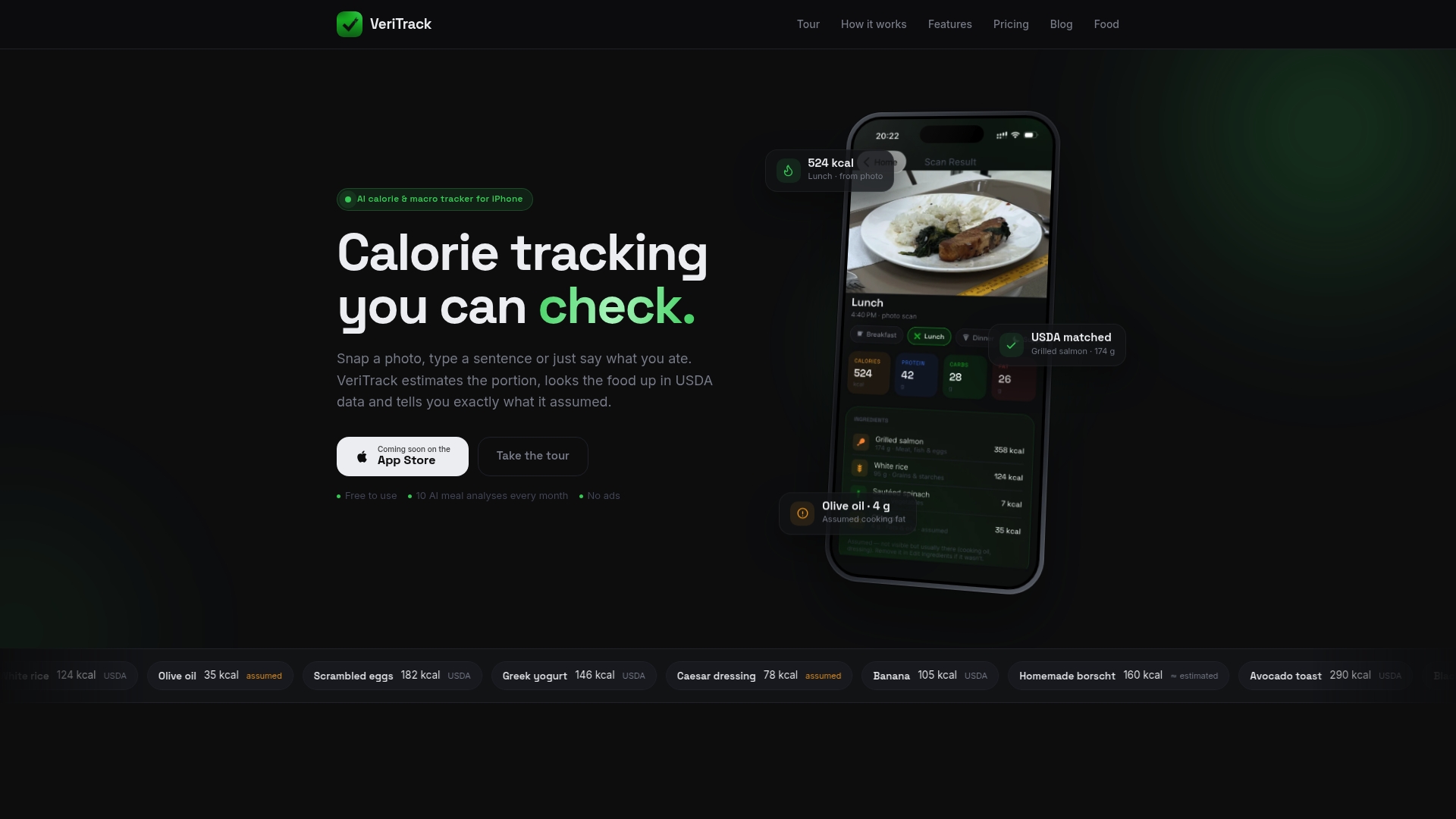
The free tier includes a limited number of AI meal analyses each month, and VeriTrack Premium unlocks unlimited analyses and the full feature set. You also get a daily meal diary, personalized daily targets based on your body and activity level, progress tracking and read-only Apple Health integration. Try VeriTrack on your iPhone and log your next meal in a few seconds.
When a food diary is not the right tool
Food diaries work well for many people, but not everyone. Northwestern Medicine notes that a food diary may not work well for everyone, and that if you have an eating disorder, or wonder whether a diary would help you, you should ask your healthcare team.
Pay attention to how tracking feels. If you notice anxiety when you miss an entry, rigid rules about what you can eat, or logging that starts to crowd out meals with friends or family, pause and speak with a doctor, registered dietitian or mental health professional. If you are in recovery from an eating disorder, follow your treatment team’s guidance on whether and how to track.
The point of a diary is to support a calm, informed relationship with food. If it stops doing that, adjust the approach with professional support.
FAQ
Is keeping a food diary a good idea?
For most people, yes. It shows you what you actually eat, and in one large study, people who kept daily food records lost twice as much weight as those who did not. If you have a history of disordered eating, check with your healthcare team first.
What is the best way to keep a food diary?
The best way is the one you will do every day. Record foods right after eating, include drinks and weekends, and be as specific as you reasonably can about preparation and portions. A notebook, a phone note, photos or an app all work.
How long should I keep a food diary?
It depends on your goal. A three-day diary with two weekdays and one weekend day gives a useful snapshot, and a week gives you enough to spot patterns. For weight management, many people keep logging for longer, since frequency was a strong predictor of results in research.
Do I need to weigh and measure everything?
No. Cleveland Clinic suggests not requiring exact measurements when you start. Hand comparisons and household measures are good enough to reveal your patterns, and you can add a kitchen scale later if you want more precision.
Sources
- Food Journaling: What it is, Benefits & Tips, Cleveland Clinic
- Why keep a food diary?, Harvard Health
- Keeping A Food Diary Doubles Diet Weight Loss, ScienceDaily
- Is the most effective weight-loss strategy really that simple?, ScienceDaily
- Food Diary, Northwestern Medicine
- Food, Lifestyle and Symptom Diary, Alberta Health Services
- Completing your 3-Day Food Journal, UCSF
- Participant Guide: Track Your Food, CDC
- Food journaling: How to keep track of what you eat, HealthLink BC