
Protein Intake Tracking: Set a Target and Hit It Daily
Learn how to set a daily protein target, track it accurately, spread it across meals and cover it on a vegetarian diet, with a practical method for busy days.
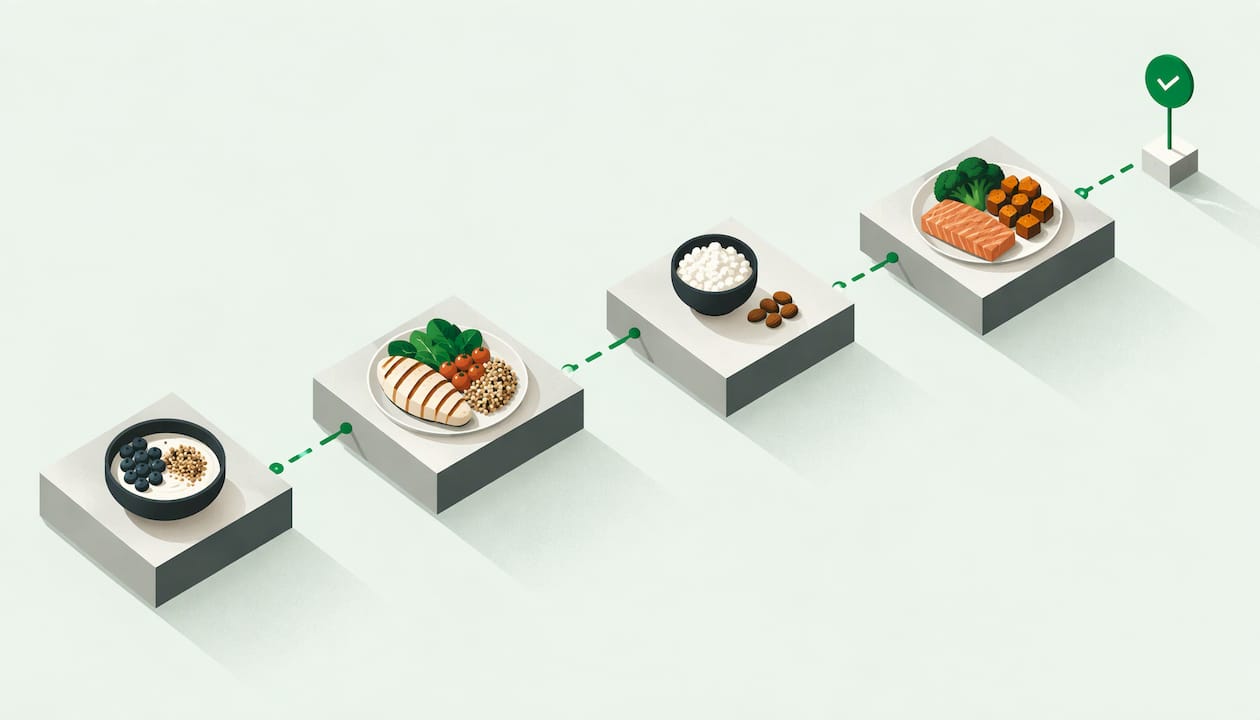
Tracking protein comes down to three steps: set a daily target from your body weight, log what you eat with portions you can trust, and spread the grams across your meals. VeriTrack is built for the second step. You photograph, type or speak a meal, it estimates the portion using USDA data (and LiDAR depth on supported iPhones), and it shows the assumptions behind each number so you can correct them.
You do not need perfect logs. You need logs that are close enough, and honest about where they are guessing.
TL;DR
- Start with a target: the National Academy of Medicine minimum is 0.8 g of protein per kg of body weight per day (about 0.36 g per pound). Active people and older adults often aim higher.
- Aim for roughly 25 to 30 g at each main meal rather than one big dinner.
- Accurate tracking depends on portions. Weigh when you can, use a photo or voice entry when you cannot, and check the assumptions.
- Vegetarians can reach their goal with soy foods, lentils, beans, seitan and dairy or eggs if they eat them. Plan for these at every meal.
- Review your week, not just your day. Consistency beats a perfect log.
Table of Contents
- How much protein do you need?
- How to track protein accurately
- Estimating protein when you cannot weigh everything
- Spreading protein across your day
- Protein tracking for vegetarians
- Our view: protein tracking should show its work
- Try it in VeriTrack
- FAQ
- Sources
How much protein do you need?
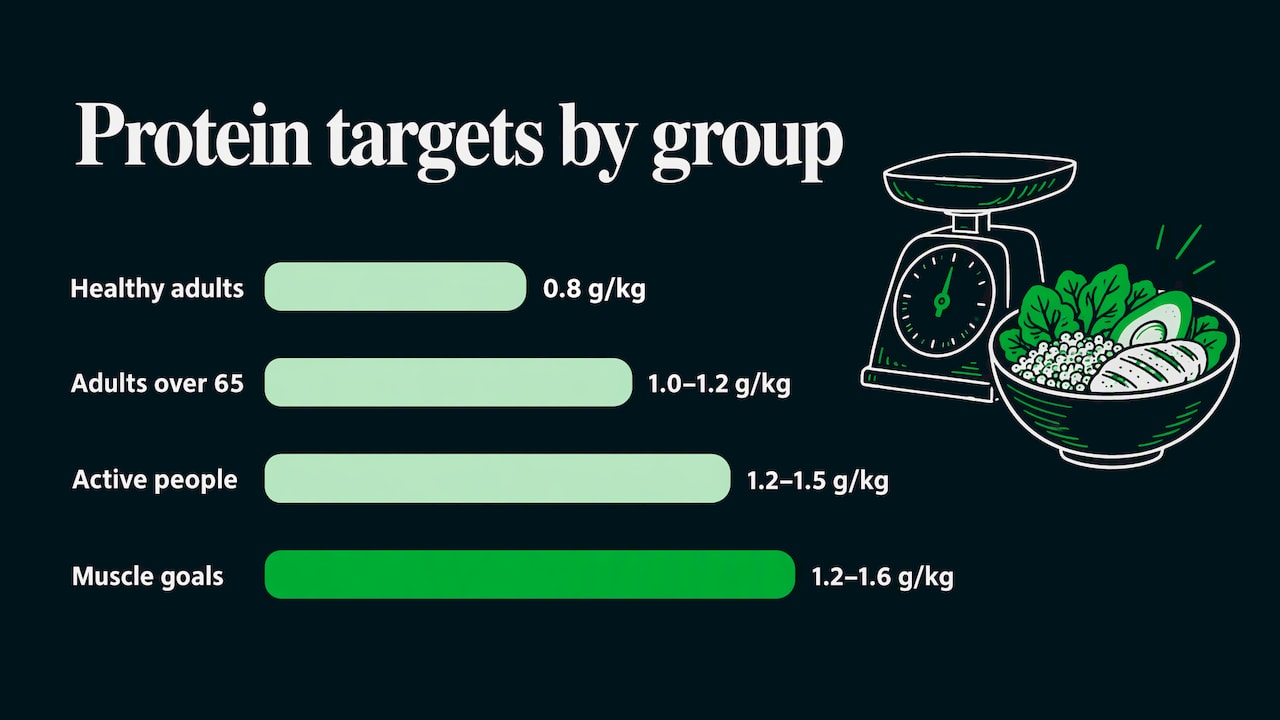
The baseline is simple. Harvard’s Nutrition Source cites the National Academy of Medicine minimum of 0.8 g per kg of body weight per day. That is about 50 g for a 140 lb person and about 70 g for a 200 lb person. The acceptable range is 10 to 35% of daily calories from protein.
To calculate your own:
- Divide your weight in pounds by 2.2 to get kilograms.
- Multiply by 0.8.
A 180 lb adult is about 82 kg, so roughly 65 g a day, as shown in MD Anderson’s dietitian guide.
When your target should be higher
The 0.8 g/kg figure is a minimum for healthy adults. The same MD Anderson guide gives 1.0 to 1.2 g/kg for adults over 65 and up to 1.2 to 1.5 g/kg for active people. Cleveland Clinic describes 1.2 to 1.6 g/kg as a common starting range for people who want to build or keep muscle. Its example is a 170 lb (77 kg) person aiming for at least about 92 g a day.
Here is how that looks for a 170 lb person:
| Goal | Per kg | Daily protein |
|---|---|---|
| General minimum | 0.8 g | about 62 g |
| Active, building muscle | 1.2 to 1.6 g | about 92 to 123 g |
These are general rules. If you are pregnant, have kidney disease, diabetes or are in cancer treatment, your needs differ, and a registered dietitian or your doctor should set your number. MD Anderson notes that people with chronic kidney disease who are not on dialysis may be advised to eat less protein.
Write your target down as a single number, then set it in your app. Our guide on body recomposition macros shows how protein fits next to carbs and fat when you are trying to lose fat and keep muscle.
How to track protein accurately
Most tracking errors come from portions, not from the food database. A cup of rice, a “chicken breast” or a scoop of cottage cheese can easily vary by 30% or more.
Use a repeatable routine
The USDA’s Healthy Eating Challenge suggests a good method. Log your food for a few days, include brand names and specific types, and use the package serving size as a guide for quantity. For foods without a label, look up USDA FoodData Central, searching specifically first and then more broadly. Values are listed per portion, so scale them: if a food is listed per 100 g and you ate 200 g, double the numbers.
Here is where each step goes wrong, and what helps:
- Packaged food. The label serving is rarely what you eat. Check how many servings you actually had.
- Raw versus cooked. Meat and grains change weight when cooked. Log the state you weighed.
- Mixed meals. A stir-fry or a burrito hides the protein. Log the main protein source and its portion separately where you can.
- Forgotten extras. A handful of nuts or a second helping vanishes from memory by evening. Log as you eat.
Where VeriTrack takes work off your hands
In VeriTrack you can photograph a plate, type a description or use your voice. Nutrition values come from USDA data. On supported iPhones, LiDAR measures depth, which helps estimate portion size. Each estimate shows its assumptions, such as the cooked weight or the type of cut, so you see what the number rests on and can correct it. That matters for protein: if the app assumed 4 oz of chicken and you ate 6 oz, one correction fixes the entry.
For a wider look at the habit, see how to track calories on iPhone and keeping a food diary.
Estimating protein when you cannot weigh everything
Some meals will be restaurant meals, shared plates or lunch at your desk. A quick, reasonable method:
- Find the main protein on the plate: meat, fish, eggs, tofu, beans, dairy.
- Estimate its size against your hand. A palm-sized piece of cooked meat is roughly 3 to 4 oz, a common reference for about 20 to 30 g of protein.
- Add smaller contributions from grains, nuts and dairy.
- Log a range in your head, then enter the middle value.
A photo does this faster. Our guide to estimating meal calories walks through the same logic for energy, and portion control shows how to judge serving sizes by eye. Being off by 5 to 10 g on one meal washes out over a week. Being off by 30 g every day does not, so aim to be roughly right every day.
Spreading protein across your day
Where you eat protein matters as well as how much. A 2025 review of protein and aging reports that muscle protein synthesis is maximally activated at about 0.4 g/kg per meal, which is roughly 25 to 30 g for four eating occasions. CSIRO’s protein report also names 25 to 30 g per main meal as the threshold for benefits on hunger and muscle metabolism.
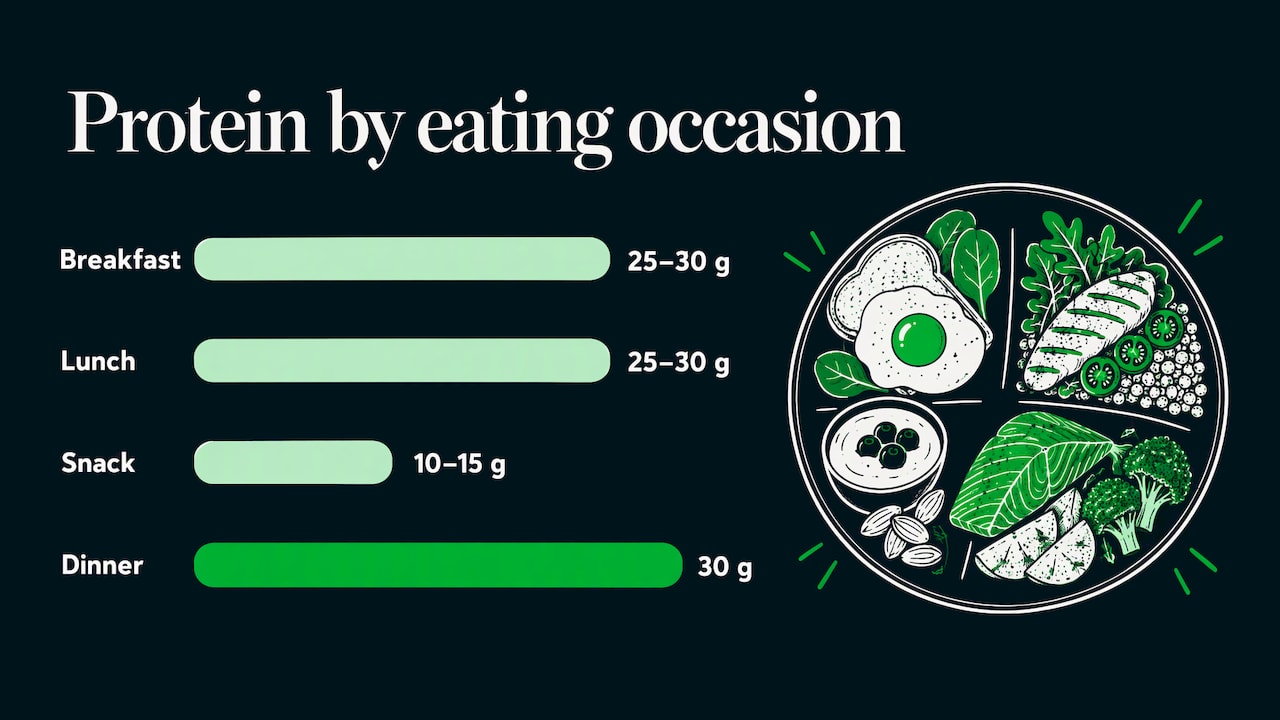
Most people front-load nothing and back-load everything. A UK study of 256 adults aged 65 to 89 found morning intake was the lowest, with only 21 to 26% reaching 25 g at breakfast. Raising breakfast protein was the simplest improvement.
A sample day for a 100 g target:
| Meal | Example | Protein |
|---|---|---|
| Breakfast | Greek yogurt, oats, a handful of nuts | 25 to 30 g |
| Lunch | Chicken or lentil bowl | 25 to 30 g |
| Snack | Cottage cheese or a protein shake | 10 to 15 g |
| Dinner | Salmon or tofu with grains and vegetables | 30 g |
If you plan the day around breakfast, a tool that reminds you to log early helps. VeriTrack’s gentle reminders are meant to keep you on track without nagging. If you are planning meals around pregnancy or a new baby, this planner for pregnancy and early parenthood covers feeding and recipes alongside routines.
Protein tracking for vegetarians
Vegetarians can meet protein goals, and the 2025 aging review notes that both animal and plant proteins can do the job, with legumes, nuts and seeds as the main plant sources. The challenge is that plant foods carry less protein per bite, so tracking shows you the gap quickly.
The VA Plant-Based Protein Guide lists these amounts:
| Food | Portion | Protein |
|---|---|---|
| Tempeh | 1 cup | 34 g |
| Cooked soybeans | 1 cup | 31 g |
| Seitan | 3 oz | 21 g |
| Cooked lentils | 1 cup | 18 g |
| Black, kidney, chickpea or pinto beans, cooked | 1 cup | 15 g |
| Extra-firm tofu | 4 oz | 12 g |
| Cooked textured vegetable protein | 1/2 cup | 12 g |
| Quinoa | 1 cup | 8 g |
| Peanut butter | 2 Tbsp | 8 g |
To build a 25 to 30 g meal: a cup of lentils (18 g) plus a cup of quinoa (8 g) lands at 26 g. Tofu scramble with 4 oz of extra-firm tofu (12 g) plus two tablespoons of peanut butter on toast (8 g) gets you most of the way at breakfast.
Tips for vegetarian logging:
- Log legumes as cooked, since dry and cooked weights differ a lot.
- Name the specific food, such as “extra-firm tofu” rather than “tofu”, so the lookup matches.
- Add up your total at lunch. If you are under, add a protein-rich snack rather than waiting for dinner.
VeriTrack’s photo and voice entry work for plant-based plates, and you can correct any assumption it shows. Browse food and recipes for ideas.
Our view: protein tracking should show its work
Protein is the macro people most want to get right and most often guess at. A target of 120 g means little if the entries behind it are a rough guess you cannot inspect.
That is why we built VeriTrack to show its assumptions. When you photograph a meal, you see what the portion estimate rests on, and you can change it. LiDAR depth measurement on supported iPhones helps with portion size, and USDA data sits behind the nutrition values. Your daily target is based on your body and activity level.
We would rather you log imperfectly and consistently than abandon tracking because it felt like homework. Read about why calorie tracking works even when it is not perfect.
Aliaksei
Try it in VeriTrack
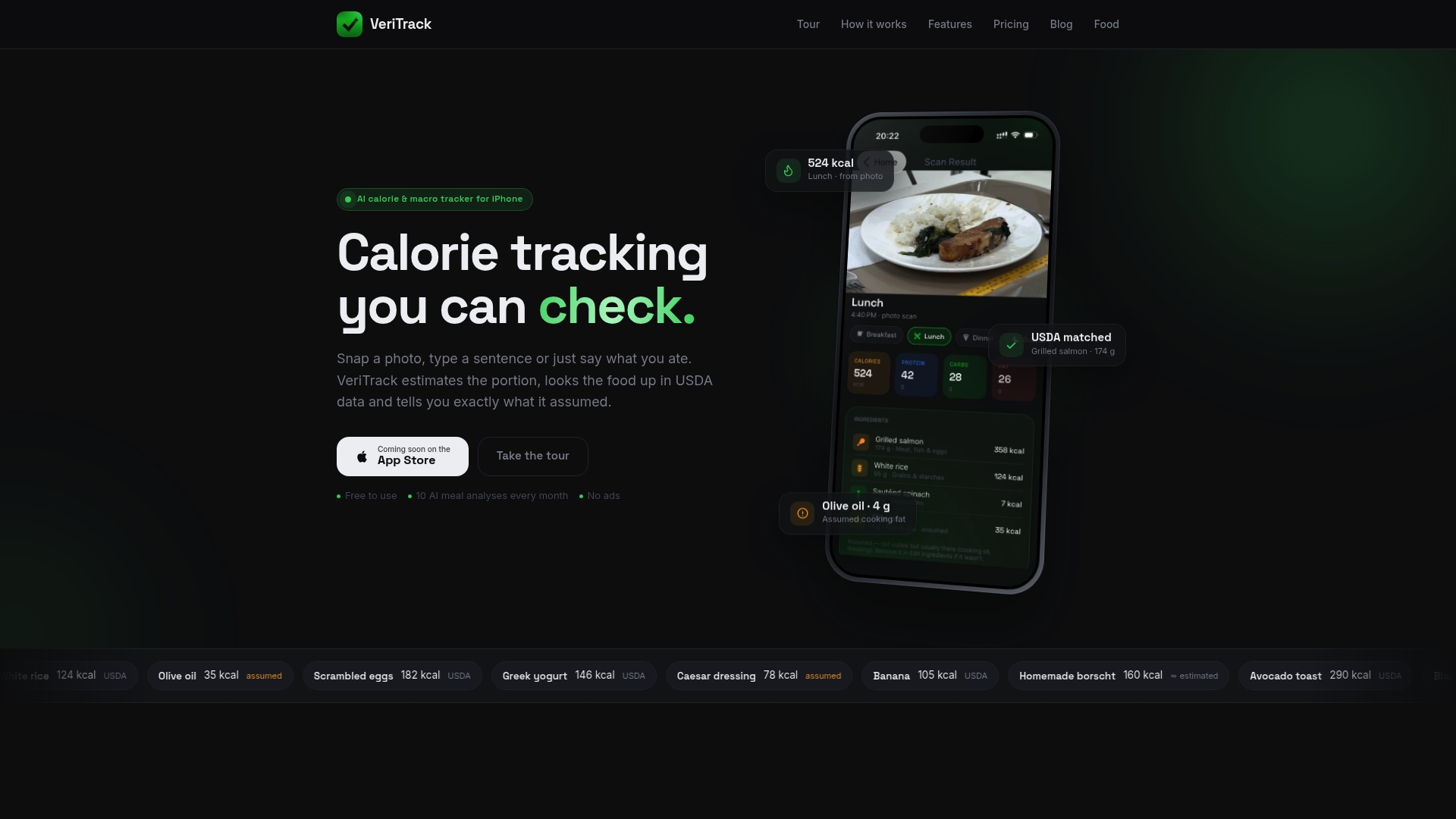
If you want your protein logs fast and checkable, VeriTrack is an iPhone app that handles photo, text and voice entries, shows the assumptions behind each estimate and reads from Apple Health (read-only). The free tier includes a limited number of AI meal analyses per month, and VeriTrack Premium unlocks unlimited analyses and the full feature set. Find it at veritrack.app.
FAQ
How do I set a protein target?
Start with 0.8 g per kg of body weight as the minimum for healthy adults, then adjust for age, activity and goals. Many active people use 1.2 to 1.6 g/kg, according to Cleveland Clinic. If you have a medical condition, ask your doctor or a registered dietitian for your number.
Can I track protein without logging every meal?
Yes. Log your main protein at each meal and estimate the rest. Photo or voice logging makes this quick. Weekly averages matter more than any single day.
How do I get enough protein as a vegetarian?
Build each meal around a concentrated source such as tempeh, soybeans, lentils, tofu, seitan or beans. Aim for 25 to 30 g per meal, and log legumes as cooked. The table above shows the grams per portion.
Is it a problem to eat most of my protein at dinner?
It is common, but spreading protein across meals fits the research better. Research on older adults found breakfast was the weakest meal, and raising it was the easiest fix.
Sources
- Protein, The Nutrition Source (Harvard T.H. Chan)
- How much protein do I need? A dietitian answers (MD Anderson)
- How Much Protein Should I Eat a Day? (Cleveland Clinic)
- Take the Healthy Eating Challenge (USDA AgLab)
- Protein and Aging: Practicalities and Practice (PMC)
- Protein report (CSIRO)
- Inadequacy of Protein Intake in Older UK Adults (PMC)
- Plant-Based Protein Guide (VA)