
Eating Back Exercise Calories: How Much, If Any
Should you eat back exercise calories? Learn why watch numbers run high, how to set one steady daily target, and when a hard workout does call for extra food.
For most people, the best answer is not to eat back what your watch says you burned. Set one daily calorie target that already accounts for your normal activity, and adjust it from your weight trend over several weeks. The exception is long, hard training, where you do need to add food to recover.
That answer rests on two facts. Exercise calorie numbers are estimates with a wide margin of error. And a single workout is a small part of your total daily burn. VeriTrack is built around the same idea: seeing which numbers are solid and which are estimates, so you can decide what to do with them.
TL;DR
- Most adults doing moderate exercise (walking, cycling, swimming, lifting) don’t need to eat back workout calories. Athletes training hard for hours each day do.
- Wearables often miss by 15 to 25 percent, and the error usually runs in the direction that makes you eat too much.
- A better method is one steady calorie range based on your goal and typical activity, adjusted from weekly trends, not from single workouts.
- If you are truly hungry or training long and hard, add food on purpose, mostly protein and carbohydrate, and watch your weight trend.
Table of Contents
- What “eating back” means
- Why the numbers on your watch run high
- A worked example
- Exercise is a smaller piece than it feels like
- Do people just eat more after exercise anyway?
- When you should eat more
- A simple method that does not depend on your watch
- What about days you really do burn a lot?
- Where tracking gets in the way
- Our view on exercise calories
- Log food in seconds, check every estimate
- FAQ
- Sources
What “eating back” means
Eating back calories means adding the calories your tracker says you burned in a workout to your food allowance for the day. Say your target is 1,800 kcal. You run, your watch says 400 kcal, and you eat 2,200 kcal.
The idea sounds logical: you spent energy, so you get to spend it again. It also feels fair, since you earned it. The trouble is that it treats a rough estimate as an exact bank balance.
Two different approaches get mixed up under this name:
- Eating back every workout. Your target starts low and goes up after each session, based on the device number.
- Building activity into the target. Your target is set once, using your body and typical activity level, and it does not move with each workout.
The second is simpler and usually works better. Here is why.
Why the numbers on your watch run high
The calories shown after a workout come from a formula using heart rate, movement, age, weight and sex. It is an estimate of energy burned, and it can be wrong in both directions.
Research backs this up:
- A Florida International University study found that popular smartwatches had error rates often between 15 and 25 percent compared with lab equipment, and that some brands overestimated more than others.
- A 2020 systematic review of wearables found that in everyday conditions, only 18% of comparisons with reportable error landed within 10% of the true value. About half were off by more than 10% in the low direction, and about 29% were off by more than 10% in the high direction.
- A 2017 treadmill study with 62 participants found that the error for energy expenditure ranged widely between devices and effort levels, from about 14% to over 200% for one watch, and that devices tended to read higher than the lab measurement at most stages.
The takeaway is not that your watch is useless. It is good for heart rate, consistency and seeing that you showed up. As a number to add straight onto your plate, it is shaky.
The errors also tend to add up in a bad way. Exercise screens show a big, satisfying number. Food logs tend to be missing a splash of oil, a few bites or a second helping. A high exercise estimate plus a low food estimate can wipe out a deficit without you noticing.
A worked example
Suppose you have set a target that gives you a deficit of 500 kcal per day, and you do a 45-minute workout that your watch says burned 400 kcal.
| Scenario | What the watch says | Actual burn (if the watch is 25% high) | Food added | Result vs. plan |
|---|---|---|---|---|
| Eat back nothing | 400 kcal | 320 kcal | 0 kcal | Deficit grows by 320 kcal |
| Eat back half | 400 kcal | 320 kcal | 200 kcal | Deficit grows by 120 kcal |
| Eat back all | 400 kcal | 320 kcal | 400 kcal | Deficit shrinks by 80 kcal |
The 25% figure is an illustration in the middle of the range reported above, not a prediction for your watch. Your own error could be smaller, larger or in the other direction.
Now add typical food-log slip-ups. If you also under-log by 150 kcal, eating back everything can quietly turn a planned deficit into maintenance. That is the pattern behind many stalled weeks: you were consistent, but the accounting was off.
Exercise is a smaller piece than it feels like
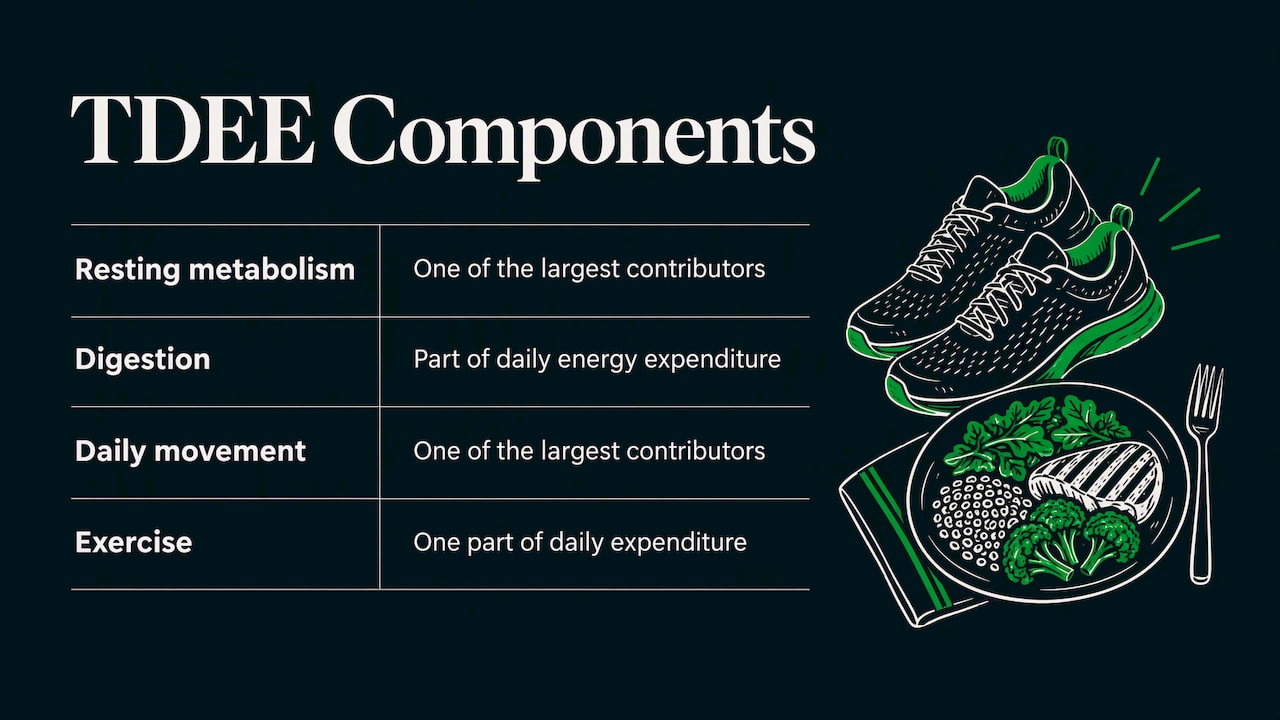
A workout is one part of your total daily energy expenditure (TDEE), which is everything you burn in a day: your resting metabolism, digestion, daily movement and exercise. Most of the total comes from resting metabolism and everyday movement, not the gym.
Gundersen Health System estimates that exercise plays at best a 30% role in weight loss, with what and how much you eat as the biggest factor. If you want to go deeper on how this fits together, our guide to energy balance walks through intake, expenditure and what to do with the result.
This is also why the “build it into one target” approach works. If you already include your normal training week when estimating your daily burn, then each workout is already counted. Adding it again for every session double counts it. Our article on maintenance calories explains how to find the number that your target starts from.
Do people just eat more after exercise anyway?
Not as much as you might think. A meta-analysis on acute exercise and later energy intake found no meaningful change in absolute energy intake after a single exercise bout of about 200 kJ, which suggests little compensation. It also pointed to aerobic exercise as a way to create an energy deficit with minimal compensation.
Appetite is also not a simple calculator. A 2019 review of energy intake in athletes reports that exercise temporarily suppresses the hunger hormone ghrelin, so a hard session does not always make you hungry right away. That is one more reason a number on a screen is a poor guide to how much you should eat.
When you should eat more
“Don’t eat it all back” does not mean “never eat more.” There are real cases where more food helps.
Long or very hard training
Gundersen Health System notes that athletes doing vigorous workouts for several hours each day need additional calories. If you are training for a marathon, doing two-a-days or spending big blocks of time on a bike, your normal target may be too low for you to perform and recover.
Signs your intake is too low include dragging through sessions, poor sleep, constantly cold or irritable, and strength dropping week to week. If that sounds like you, raise your target, then watch your weight trend and energy for two to three weeks before changing it again.
Recovery meals
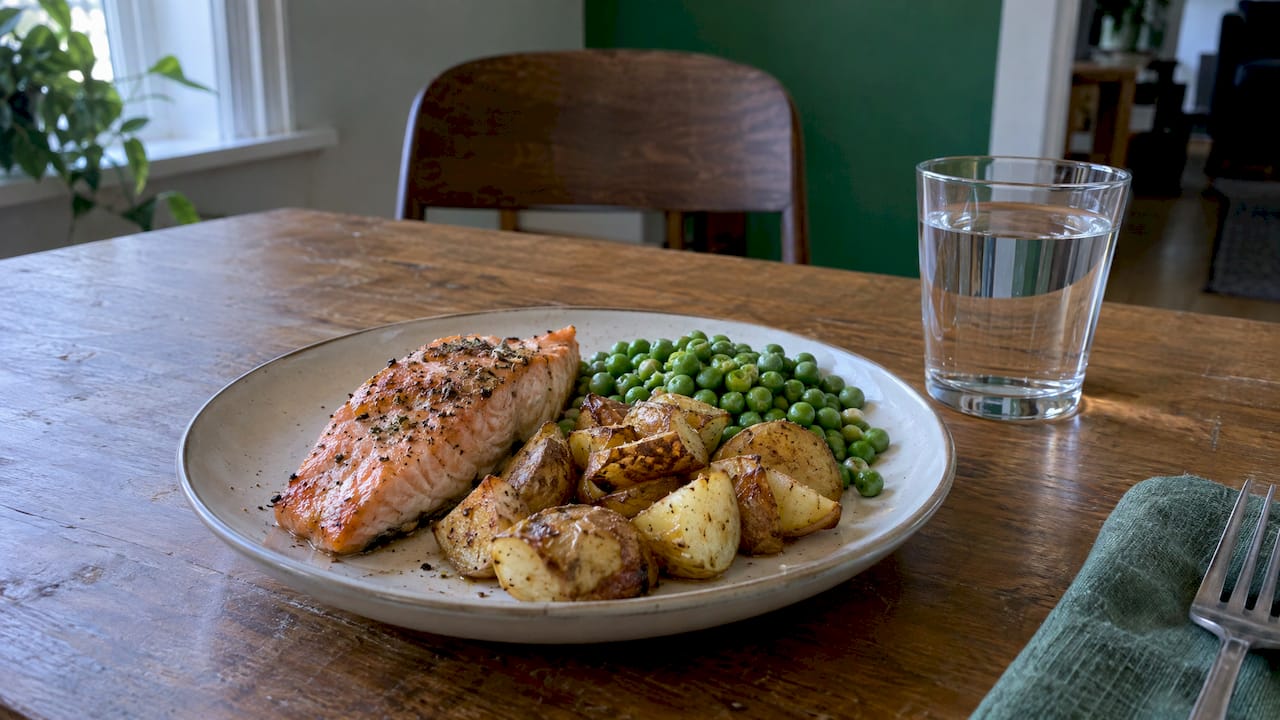
The same 2019 review notes that protein and carbohydrate soon after exercise, and throughout the hours that follow, support recovery and muscle building. You do not need a huge post-workout meal after a 30-minute walk. After a hard lifting session or long run, plan a proper meal with protein in it, and log it.
Recovery is not only food. Sleep, easy days and things like post-workout massage options can help you feel ready for the next session when your schedule is demanding.
Actual hunger
If you are hungry, eat. A small deficit you can keep up for months beats a big one you abandon in two weeks. Choose protein, fiber and volume (vegetables, fruit, beans, yogurt) to stay full, then see how your weight trend responds.
Safe pace
The National Athletic Trainers’ Association position statement says weight loss goals should average about 1 to 2 lb (0.5 to 0.9 kg) per week and not exceed 1.5% of body weight per week. If you are losing faster than that, you probably need to eat more, not less. It also says the best time for body-composition changes is the preparatory period outside competition, with the competitive season focused on performance. If you have a medical condition, are pregnant or have a history of disordered eating, talk to your doctor or a registered dietitian before setting a calorie target.
A simple method that does not depend on your watch
Here is a routine that works for most people.
- Set one daily target. Start from your estimated maintenance calories, which already include your usual activity, and subtract a modest amount if you want to lose weight. Add a little if you want to gain.
- Pick a protein goal. Protein helps you stay full and supports muscle while you lose fat. Our body recomposition macros guide shows how to set it.
- Log food honestly for two to three weeks. Include oils, sauces and drinks. The how to estimate meal calories article covers the small details that add up.
- Track your weight trend. Weigh a few times a week at the same time and look at the weekly average, not the daily number. Water, salt and a hard training day will move the scale without changing fat.
- Adjust slowly. If your average weight has not changed in two to three weeks and you have been consistent, change your target by about 100 to 200 kcal. If your training load changes a lot (a new race block, a month off), update your activity level.
- Use rest days and training days the same way. Under-eating on rest days is a common mistake, because your muscles are still repairing. Keep your target steady rather than treating rest days as a chance to cut.
This keeps you from chasing day-to-day noise. The goal is a pattern you can follow, not a perfect score. Our piece on why calorie tracking works explains why consistency beats precision.
What about days you really do burn a lot?
Some days are very different: a long hike, a half marathon, a day of moving furniture. Two practical options:
- Eat to hunger and quality. Add a solid meal or snack with carbohydrate and protein, roughly in the range of half what your device says at most, then let your weekly trend tell you if that was right.
- Raise the target for the whole training block. If big days are now part of your week, bake that into your activity level instead of adding calories each time.
Either way, the weekly average matters more than any one day.
Where tracking gets in the way
Most people who tried eating back and stalled did not fail at discipline. They were making decisions with numbers they could not check. A watch gives you one confident figure. A food log with a guessed portion gives you another. Both can be off, and neither tells you how much to trust it.
That is the gap we care about. When you can see how an estimate was made and which parts are assumptions, you can decide where to be careful. Our guide to keeping a food diary shows how to make that habit stick without it turning into a chore.
Our view on exercise calories
We built VeriTrack because the problem with calorie tracking is rarely effort. It is trust. You log a meal, the app gives a number, and you have no idea how it got there.
The same goes for exercise calories. A single confident figure from a watch invites you to treat it as exact. We would rather you set a daily target from your body and activity level, log your food as accurately as you reasonably can, and let your trend tell you what to change.
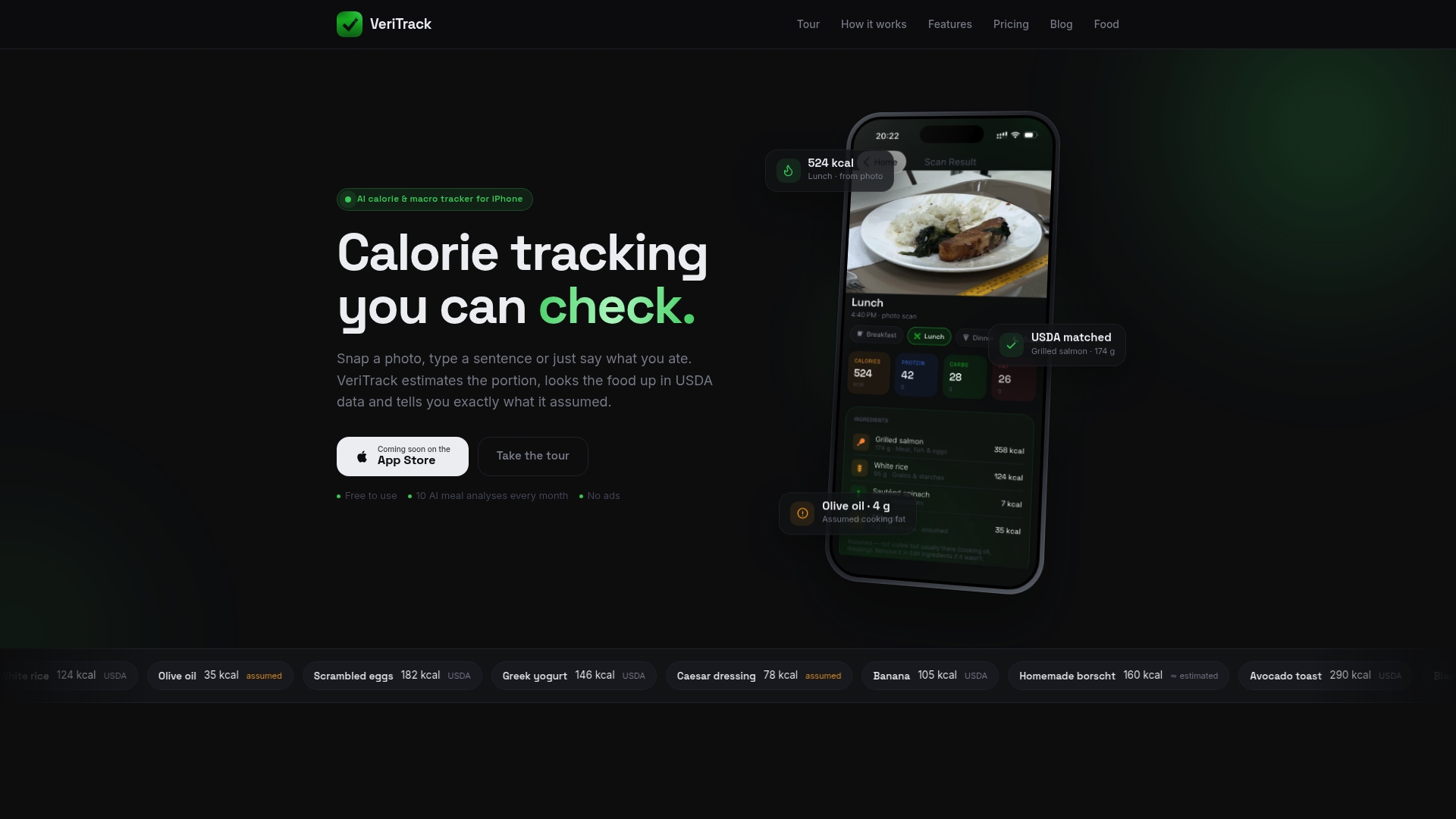
That is why VeriTrack shows its assumptions. When you photograph a meal, on supported iPhones we use LiDAR depth measurement to help estimate portion size, and we draw on USDA data for nutrition. You can see what was assumed and correct it. Your daily target is based on your body and activity level, so you are not rebuilding the math after every workout.
You do not need perfect numbers. You need numbers you can check, and a routine you can keep.
Aliaksei
Log food in seconds, check every estimate
If you track on an iPhone, VeriTrack lets you photograph a meal, type it or say it out loud. It estimates portions using USDA data, and it shows the assumptions behind each estimate so you can correct them. Your daily target comes from your body and activity level, and gentle reminders help you keep logging. You can read Apple Health data (read-only), keep a daily diary and follow your progress over time. The free tier includes a limited number of AI meal analyses each month, and Premium unlocks unlimited analyses and full features. For a walkthrough, see our guide to tracking calories on iPhone.
FAQ
Should I eat back exercise calories to lose weight?
Usually not all of them. Set a daily target that already reflects your normal activity and judge it by your weight trend over a few weeks. If you train for hours at high intensity, you will likely need more food than a sedentary plan allows.
How many exercise calories should I eat back if I do?
If you want a rule of thumb, start with no more than half of what a device reports, then watch your weekly weight average. Devices commonly overestimate by 15 to 25 percent, so half is a cushion. The better long-term fix is raising your baseline target if your training load has genuinely increased.
Why am I gaining weight when I eat back my workout calories?
The most common reason is that the burn estimate is too high while the food log is too low. Together they can erase your deficit. Water retention after hard training can also raise the scale for a few days, so judge by the weekly average, not one weigh-in.
Do I need to eat more on rest days or training days?
Try to keep both close to your target. Rest days are when your muscles repair, so cutting hard on them can leave you tired and hungry. If you notice your performance dropping, raise your overall target instead of swinging up and down.
Sources
- Should I eat back my exercise calories? Gundersen Health System
- New study finds fitness watches consistently overestimated calories burned
- Reliability and validity of commercially available wearable devices (2020 review)
- Estimating accuracy at exercise intensities: a comparative study (2017)
- Acute exercise and subsequent energy intake: a meta-analysis
- Measurement, determinants, and implications of energy intake in athletes (2019)
- National Athletic Trainers’ Association position statement on safe weight loss