
Recipe Macro Tracking: Calculate Macros Per Serving
Learn how to track macros for homemade recipes and meal prep: weigh ingredients, adjust for cooking, divide into servings and log each portion accurately.
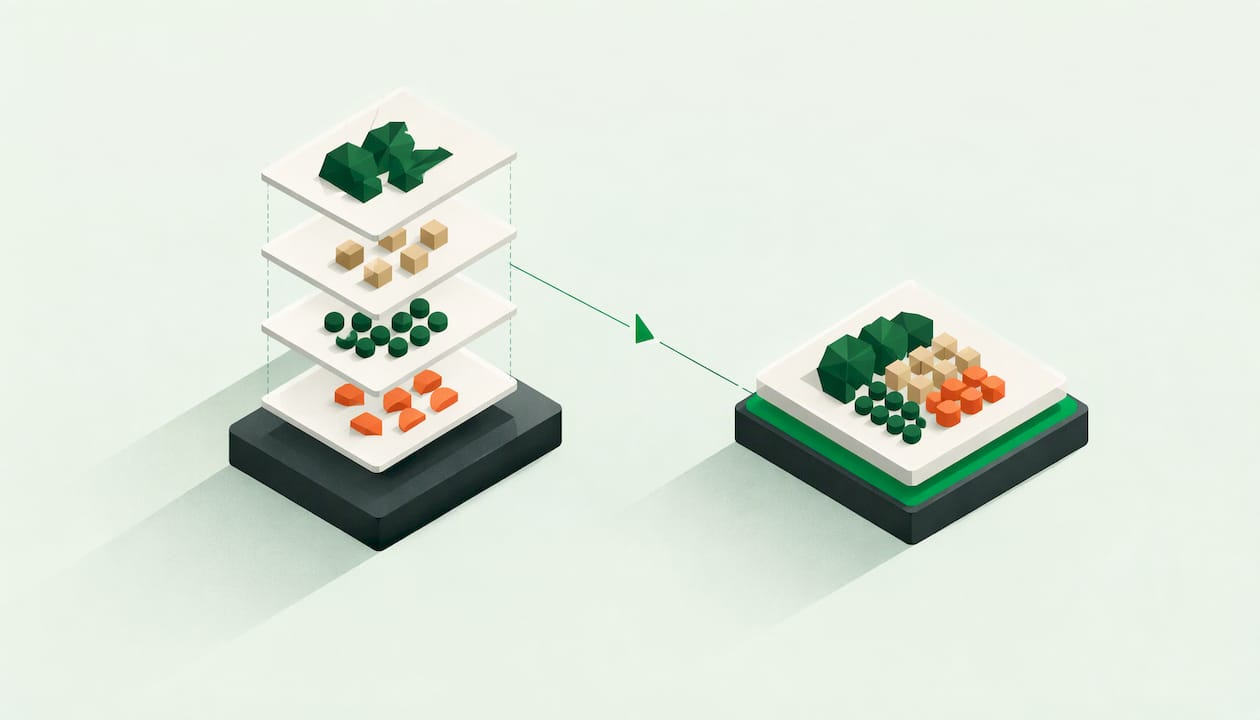
To track the macros in a recipe, add up the calories, protein, carbs and fat of every ingredient, weigh the finished dish, then divide by the portion you actually eat. Three things decide whether the number is any good: weighing ingredients, noting whether they were raw or cooked, and writing down your assumptions so you can correct them later. That last step is where most recipe tracking quietly goes wrong, and it is the step VeriTrack is built around: it shows the assumptions behind each estimate, so you can see what a number rests on and fix it.
This guide walks through the full method, with a worked example, a meal prep routine and the mistakes that skew results.
TL;DR
- Total the macros for every ingredient, then divide by the number of servings. Weigh the cooked dish if you want portions of equal size.
- Weigh ingredients and mark each one as raw or cooked. Cooking changes weight, and that changes the per-serving math.
- Count the cooking oil, the sauce and the “just a splash”. They are the most common omissions.
- For meal prep, work out the recipe once, then log each portion by weight or photo instead of redoing the math.
- Treat the result as a well-labeled estimate, not a lab value, and adjust it as you learn what your meals really contain.
Table of Contents
- Why homemade food is harder to track than packaged food
- The basic method: ingredients to servings
- Weigh ingredients, and say whether they are raw or cooked
- What cooking does to the numbers
- The most common recipe tracking mistakes
- How to track macros for meal prep
- Where VeriTrack fits when you cook at home
- Tracking calories alongside exercise
- A simple weekly routine
- Try it on your next batch
- FAQ
- Sources
Why homemade food is harder to track than packaged food
A packaged snack has a nutrition label. A pot of chili does not. Every ingredient has its own numbers, the pot loses water as it simmers, and you rarely eat exactly one-sixth of it.
That gap matters because people are not very good at eyeballing food. One study of 54 postgraduate dietetics students in Delhi, India, found significant differences in portion estimates for 80% of the 40 foods tested. The same study reported a mean absolute error of 27.77% when students used household utensils. These were trained students, and the results apply to that sample, but they show why guessing a ladle is not a reliable plan.
The American College of Sports Medicine adds that adults trying to lose weight may underreport food intake by up to 47%. Its practical advice for tracking is simple: weigh and measure portions, and track all of the ingredients in a recipe.
None of this means you have to be perfect. Consistent, reasonably accurate logging beats occasional precision. If you want the bigger picture, our post on why calorie tracking works even when you don’t do it perfectly covers it.
The basic method: ingredients to servings
The core idea is arithmetic you can do on paper:
- List every ingredient with its weight.
- Look up calories, protein, carbs and fat for each amount.
- Add them up to get the whole-recipe total.
- Divide by the number of servings.
For the lookup, a government database is a solid foundation. VeriTrack’s nutrition lookup is based on USDA data, so the values behind your log come from a standard reference rather than a guess.
A quick check on the numbers
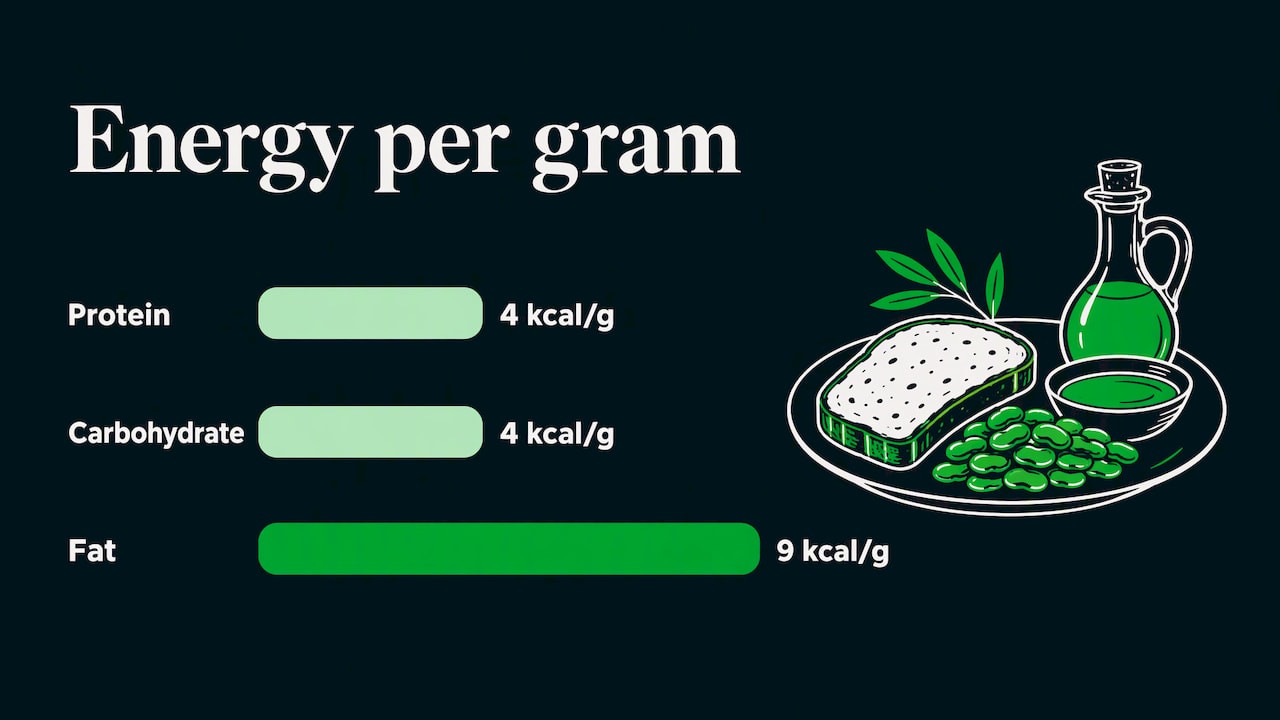
Calories come from the three macros: 4 kcal per gram of protein, 4 per gram of carbohydrate and 9 per gram of fat. If your totals for grams and calories do not roughly agree, something was entered wrongly. Alcohol and fiber add small differences, so expect a gap of a few percent rather than an exact match.
Worked example: a pot of turkey chili
These figures are an illustration, not a recipe to copy. Say you add up every ingredient in a batch and get:
| Macro | Total for the pot | Calories |
|---|---|---|
| Protein | 180 g | 720 kcal |
| Carbohydrate | 210 g | 840 kcal |
| Fat | 80 g | 720 kcal |
| Total | 2,280 kcal |
The pot makes 6 servings. Divide each total by 6:
| Per serving | Amount |
|---|---|
| Protein | 30 g |
| Carbohydrate | 35 g |
| Fat | about 13 g |
| Calories | 380 kcal |
That is the whole method. The rest of this guide is about making the inputs trustworthy.
Weigh ingredients, and say whether they are raw or cooked
Cups and spoons vary. A cup of flour can differ by a large margin depending on how you scoop it. A kitchen scale removes that problem.
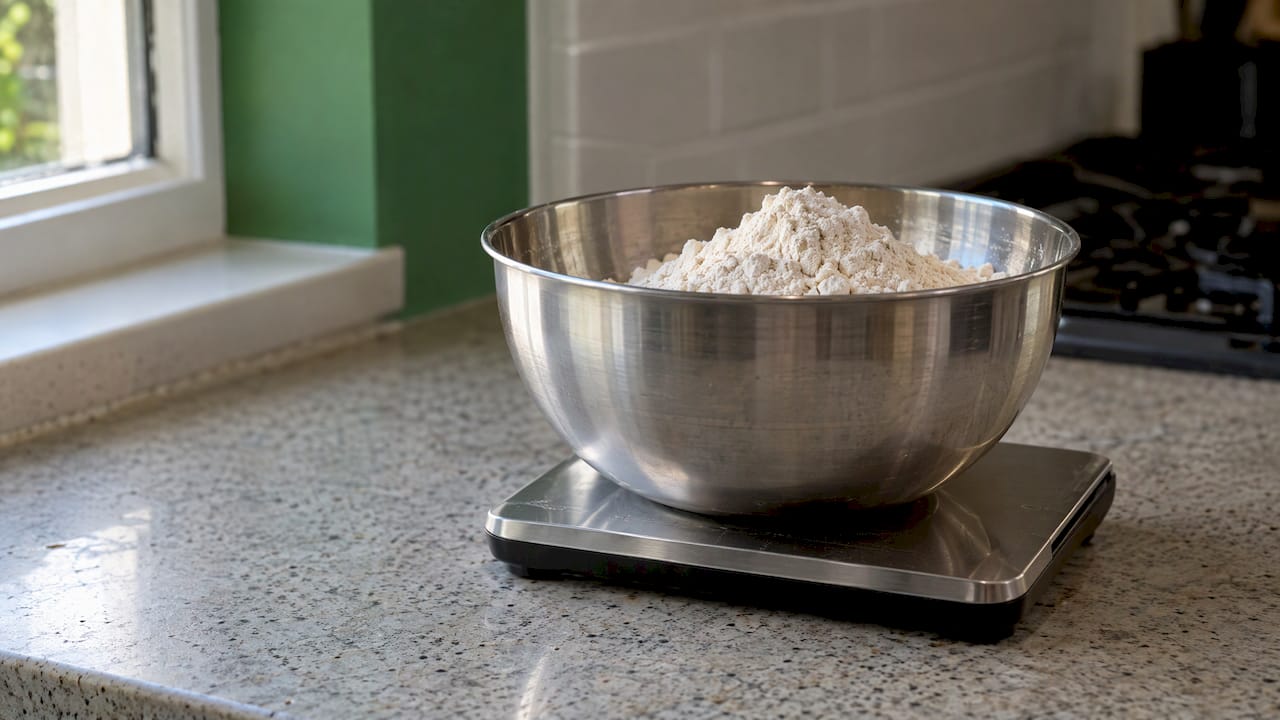
US military nutrition guidelines for recipe analysis recommend entering ingredients by weight and identifying each as raw or cooked. They also say to check current product labels against what your software shows.
The raw-or-cooked label is not a detail. 100 g of dry rice and 100 g of cooked rice are very different amounts of food, because cooked rice has absorbed water. If you weigh dry rice but log it as cooked, you will undercount. Pick one state per ingredient and stay with it.
A simple rule for most home cooks:
- Weigh meat, rice, pasta and grains raw when you add them to a recipe, and log them as raw.
- Weigh leftovers or restaurant food as served and log them as cooked.
- Never mix the two for the same item.
What cooking does to the numbers
Cooking moves water and fat around. A pot of stew loses water as it simmers, so the same total nutrients end up in less food by weight. That is why a gram of cooked stew is denser than a gram of the raw ingredients combined.
The Food and Agriculture Organization lists the typical recipe-calculation errors: failing to adjust per-100-g values to actual weight, forgetting frying fat or water, and using inappropriate yield or retention factors. The same presentation warns that simply summing raw ingredients and reporting per 100 g may understate nutrients in the cooked food.
The USDA explains the idea behind its own tables: cooking yields reflect changes in food weight from moisture and fat loss, and they are used to convert raw values into cooked values.
You do not need to learn yield tables to apply this. You need one habit: weigh the finished dish.
The cooked-weight shortcut for equal portions
- Before you start, weigh the empty pot and write the number down.
- Cook the recipe and weigh the full pot.
- Subtract the pot weight to get the weight of the food.
- Weigh your portion on a plate and divide it by the total food weight.
If the chili weighs 1,800 g and your bowl holds 300 g, you ate one-sixth, so you ate one-sixth of the pot’s macros. You do not need to decide in advance how many servings the pot makes. This works well for chili, curry, soup, stew, casseroles and pasta sauces.
The most common recipe tracking mistakes
Forgetting the fat. A splash of oil, a knob of butter and a handful of cheese on top all disappear from memory. At 9 kcal per gram, a tablespoon of oil adds a meaningful amount to the pot. Weigh the oil in the pan before cooking, or log it as you pour.
Logging the wrong version of the food. A database entry for “ground beef” can mean different fat percentages, raw or cooked. Match the entry to the package in your hand.
Using the label’s serving size instead of your amount. Labels show nutrients per 100 g or per stated serving. Convert to the weight you actually used.
Ignoring ingredients that did not end up in the dish. If you drain the pasta water, pour off fat or leave marinade in the bowl, your total changes. Note what you drained.
Counting a recipe’s own serving size. Online recipes often list servings that are smaller than real life. Use your portion, not theirs.
Forgetting that substitutions change everything. Swapping Greek yogurt for sour cream, or whole milk for oat milk, changes the macros. Recalculate when the ingredients change.
A tidy chart can look exact even when the assumptions behind it are approximate. Write down the key assumptions next to the result: the per-100-g values you used, the amounts, how many portions, and whether things were raw, dry, cooked or drained.
How to track macros for meal prep
Meal prep is where recipe tracking pays back. You do the calculation once and reuse it for a week.
- Cook the batch and weigh the whole thing. Subtract the container weight.
- Divide into containers by weight. If the food weighs 1,800 g and you want six equal meals, each container gets 300 g. Equal weights give equal macros.
- Label each container with its calories and protein, or just the batch name and portion number.
- Log each meal when you eat it. The values are already worked out, so this takes seconds.
- Keep your recipe notes. When you remake the dish, you only need to check what changed.
If you prep several different meals, the same logic applies to each. Plan the week, calculate each recipe once, and reuse the results. Saving repeated meals is a common macro-counting tip because it makes tracking faster and easier to keep up.
This is also where a quick-logging app earns its place for busy people. Taking a photo of a container takes less time than opening a spreadsheet, and a typed description such as “turkey chili, 300 g” or a voice note does the same job. VeriTrack accepts all three ways of logging, so you can use whichever fits the moment.
Setting a daily macro target first
Recipe math only helps if you know what you are aiming for. A daily target based on your body and activity level tells you how a 380 kcal bowl with 30 g of protein fits your day. If you are working on building muscle while losing fat, our guide to body recomposition macros explains how to set yours.
Where VeriTrack fits when you cook at home
Recipe macro tracking has two weak points: portions and hidden assumptions. A spreadsheet or calculator gives you a number, but it rarely tells you what it assumed. You are left trusting it.
VeriTrack is designed to handle exactly that. You can photograph a meal, type a description or use your voice. The app estimates the portion using USDA data and, on supported iPhones, uses LiDAR depth measurement to size the portion more accurately. It then shows the assumptions behind the estimate, so you can see what it took the meal to be and correct anything that is off. That is useful for homemade meals, where the plate rarely matches a database entry exactly.
If you are choosing between weighing everything and estimating by eye, there is a middle route. Weigh the batch once when you cook, then use quick logging with visible assumptions for the everyday portions. Our posts on how to estimate meal calories and portion control for weight loss give a practical method for the portion side.
Tracking calories alongside exercise
Many people want to log food and workouts together. The sensible approach is to get the food side right first, because it is the part you control precisely.
Exercise estimates are less reliable. The ACSM notes that activity trackers have shown 27% to 93% inaccuracy depending on the brand, and it suggests using exercise as a buffer for recording errors rather than a reason to eat more. A 2020 systematic review of 60 studies in the British Journal of Sports Medicine found that the accuracy of wrist- and arm-worn monitors varied by activity type. It also found that combining heart-rate or heat-sensing technology with accelerometry reduced error in most activity types.
If you want more detail on how wearables arrive at their numbers, this overview of fitness tracker calorie estimates is worth reading.
In practice:
- Use your daily target as the main guide, not the number on your watch.
- Treat burned-calorie estimates as rough.
- If you do eat some of it back, do it modestly. Our guide to eating back exercise calories explains how much, if any.
VeriTrack reads from Apple Health in read-only mode, so your activity data can inform your daily target without the app changing anything in Health.
A simple weekly routine
You do not need to track every recipe forever. Many people find a short routine enough:
- Sunday: weigh ingredients and the finished batch for any meal prep. Write down the per-portion numbers.
- Weekdays: log each portion in seconds by photo, text or voice.
- Once a week: look back at your diary. If a recipe keeps coming out differently from what you expected, adjust the assumption, such as oil or portion size.
A written diary helps with this. If you are starting from scratch, keeping a food diary covers how to begin and how to make it stick.
Try it on your next batch
If you cook at home, the quickest way to see recipe tracking work is to log your next batch from the plate. VeriTrack’s free tier includes a limited number of AI meal analyses each month, and the Premium plan unlocks unlimited analyses and the full feature set. It is available on iPhone through the App Store.

You can start with VeriTrack and see the assumptions behind every estimate before you decide whether it fits your routine.
Our view: a number you can check
Most recipe calculators hand you a figure and ask you to trust it. We think that is backwards. A homemade meal is full of small choices: how much oil went in, how dry the rice was, how big the scoop was. Each of those moves the result.
That is why VeriTrack shows its assumptions instead of hiding them. When you photograph a meal, type it or say it out loud, you see what the estimate rests on, and you can correct it. On supported iPhones, LiDAR helps with portion size, which is the part people find hardest to judge by eye.
We would rather you log a good estimate you understand than a precise-looking number you cannot question. Consistency over perfection is what keeps people going, and it is what leads to results.
Aliaksei
FAQ
How do I calculate macros per serving for a recipe?
Add the protein, carbs, fat and calories of all ingredients, then divide each total by the number of servings. For equal portions, weigh the finished dish and divide your portion’s weight by the total weight. That gives you the fraction of the recipe you ate.
Should I weigh ingredients raw or cooked?
Both work if you are consistent and label them correctly. Weighing raw ingredients while you cook is the simplest way to build a recipe, and weighing leftovers as served suits cooked-food entries. Never log a raw weight against a cooked entry or the other way around, as the difference can be large.
Why do my homemade recipe macros not match online calculators?
Calculators differ in the database entry they use, the raw or cooked assumption, and whether they include cooking oil or drained liquid. Check each of those and your numbers will usually line up. Because VeriTrack displays its assumptions, you can see which one is causing the gap.
How do I track macros for meal prep without redoing the math every day?
Calculate the batch once, divide it into equal-weight containers and log each container as you eat it. If you change an ingredient, recalculate only that part. Logging by photo, typed note or voice keeps the daily step short.
Sources
- FAO: Recipe and other calculations (January 2021)
- HPRC: G4G Technical Guidelines for Nutrient Analysis (2021)
- ACSM: Mythbusting, Weight Loss (2023)
- British Journal of Sports Medicine: wearable energy expenditure review (2020)
- Food and Nutrition Journal: Food portion size estimation skill among postgraduate dietetics students
- USDA ARS: Table of Cooking Yields for Meat and Poultry
- Perfect Portion Sizes: How to Portion Out a Recipe