
Calorie Tracking for Keto: How to Log Fat, Carbs and Portions
Calorie tracking for keto, step by step: set a target, count net carbs, log fats and oils accurately, and catch the portion errors that stall progress.
On keto, carbs decide whether you stay in ketosis, and calories decide whether you lose, hold or gain weight. Tracking both takes a daily carb ceiling, a calorie target and an honest log of the fats that add up fastest: cooking oil, butter, cheese and nuts. With a clear target and a log that shows its own assumptions, it stays quick and does not need to be perfect.
This guide covers each part in plain steps. You will set a target, count net carbs correctly, log fat-heavy meals and avoid the mistakes that distort the numbers. We built VeriTrack so you can photograph, type or speak a meal and see exactly what was assumed. You can then correct it in a few seconds.
TL;DR
- Keto limits carbs, usually to 20 to 50 grams a day. Calories still decide whether the scale moves.
- Build your target in order: carb ceiling first, then protein, then fill the remaining calories with fat.
- Fat is where logs drift, because it is dense. A tablespoon of oil or a handful of nuts can swing a day by hundreds of kcal.
- “Net carbs” is not an FDA-defined term, so check total carbohydrate, fiber and sugar alcohols on the label yourself.
- Quick logging works best when it shows its assumptions. You can then add the missing butter or fix a portion in seconds.
Table of Contents
- Why calories still matter on keto
- Step 1: Set your daily targets
- Step 2: Count net carbs the right way
- Step 3: Log fat honestly
- Step 4: Build a daily routine that holds up
- Common keto tracking mistakes
- Try it with VeriTrack
- Our perspective
- FAQ
- Sources
Why calories still matter on keto
Keto changes the fuel your body prefers. It does not cancel energy balance. Foods that suit keto, such as nuts, cheese, nut butters and oils, are also very dense in calories. A registered dietitian quoted by Health Digest points out that a calorie surplus from foods like peanut butter, nuts and seeds can lead to weight gain even when your carbs are right.
Think of the two jobs separately:
- Carbs keep you in the keto zone.
- Calories set the direction of your weight: down, flat or up.
- Protein helps you stay full and hold on to muscle.
A day with perfect carbs and a calorie total well above what you burn will not move the scale. A day with a tidy calorie total but a sandwich in it will pause ketosis. Tracking both is how you see which one is holding you back.
If you wonder whether imperfect tracking is still worth it, it is. We wrote about why calorie tracking works even when you don’t do it perfectly. Consistency beats precision to the last gram.
Step 1: Set your daily targets
Start with calories, then carbs, then protein, then fat. This order keeps the numbers from fighting each other.
Calories
Your calorie target begins with an estimate of what you burn in a day. That means your resting energy use, multiplied by an activity level. Most calculators use the Mifflin-St Jeor equation for this. For weight loss, guides commonly subtract around 500 kcal a day for roughly a pound a week, and a smaller cut if you want a gentler pace. Maintenance means eating at your estimate. VeriTrack sets a daily target based on your body and activity level, so you start from a number rather than from a spreadsheet.
Carbs
A ketogenic plan is typically defined as 20 to 50 grams of carbohydrate per day. The Mayo Clinic’s Healthy Keto plan keeps net carbs at around 50 grams a day while building in fiber-rich foods. Pick one number in that range and keep it steady for a few weeks, so you can see how your body responds.
Protein and fat
Most guides set protein as a daily floor, often between 0.7 and 1.0 grams per pound of lean mass. Fat then fills the remaining calories. The math uses two conversion factors: fat has 9 kcal per gram, and carbs and protein have 4 kcal per gram.
A worked example
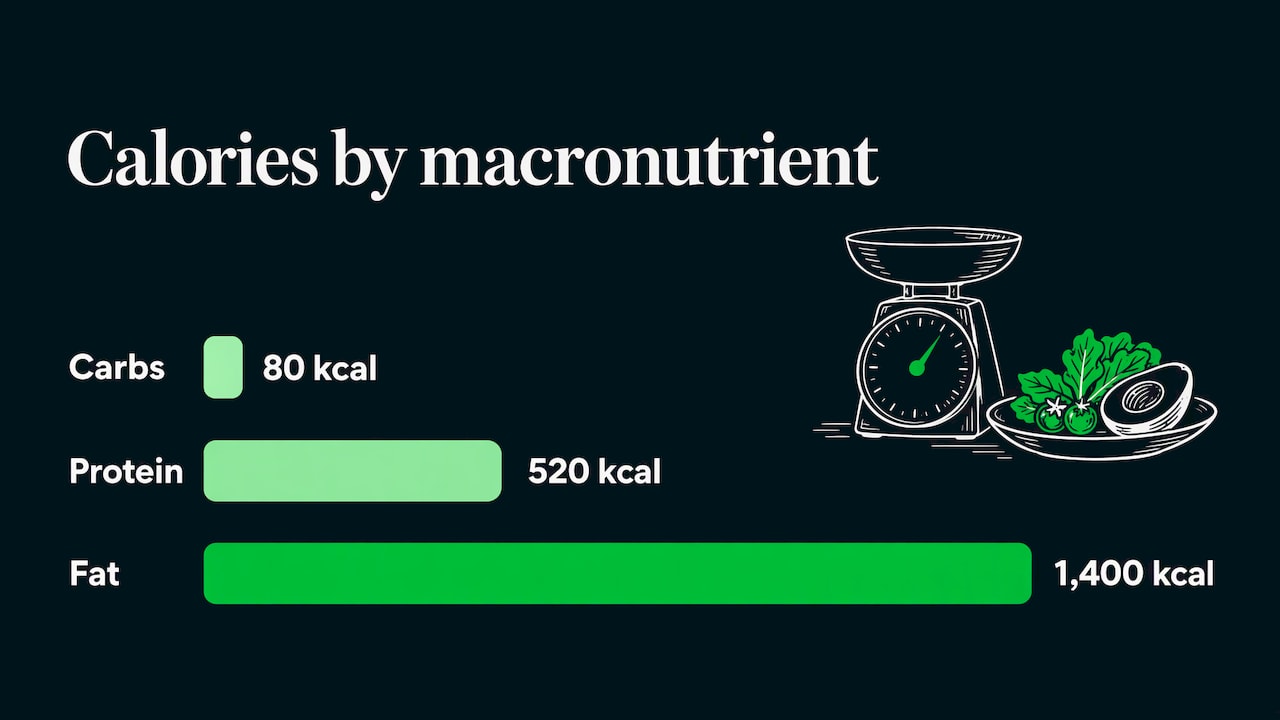
Say your target is 2,000 kcal, with a 20 g carb ceiling and 130 g of protein.
| Macro | Grams | Calories |
|---|---|---|
| Carbs | 20 g | 80 kcal |
| Protein | 130 g | 520 kcal |
| Fat (the rest) | about 156 g | 1,400 kcal |
| Total | 2,000 kcal |
The fat figure is what is left over: 2,000 minus 80 minus 520 is 1,400, divided by 9. It is a ceiling to stay near, not a minimum to hit with extra butter. If you want to go deeper on the protein number, our guide to protein intake tracking walks through setting it.
Personalization matters here. If you take medication, are managing diabetes or another condition, or are breastfeeding, talk with your doctor or a registered dietitian before you start. A clinical review of keto in women’s health says plans should account for medical conditions, medications, lactation and activity level.
Step 2: Count net carbs the right way
Net carbs are the number most keto trackers care about, so it helps to know what the term means.
The formula is simple: total carbohydrate minus fiber, and minus half of the sugar alcohols. The Tufts Health & Nutrition Letter explains that the term was created by food manufacturers for low-carb dieters. By law, the label only has to show total carbohydrate, fiber, sugars and added sugars.
That has three practical consequences:
- Read total carbohydrate first. The American Diabetes Association advises checking serving size and total carbohydrate before anything else, since all the other numbers are based on the serving.
- “Net carbs” on the front of a package is a marketing term. The ADA notes it is not an FDA-defined term, and “sugar free” only means less than 0.5 g of sugar per serving.
- Whole foods are easy. In a medium avocado, 17.1 g of total carbs minus 13.5 g of fiber leaves 3.6 g net. For packaged foods, you generally subtract half the sugar alcohol carbs.
A good habit is to log total carbs and fiber, then calculate net carbs yourself. Write down which method you use and stick with it. Switching between total and net halfway through the week makes your trend impossible to read.
Step 3: Log fat honestly
Fat is where most keto logs drift. It is easy to estimate a chicken breast. It is much harder to estimate the oil it was cooked in, the butter melted over the vegetables and the cheese that went on top.
A few examples of how quickly it adds up, using the 9 kcal per gram rule:
- One tablespoon of oil is about 14 g of fat, so roughly 120 kcal.
- A thick pat of butter on a steak is easily another 100 kcal.
- A handful of nuts eaten while cooking is rarely remembered at the end of the day.
We wrote a full guide to hidden calories and where they hide. For keto the short version is this: log the cooking fat as its own line, every time.
Weigh or estimate?
Weighing is the most accurate way to log, and it is worth doing for the densest foods: oils, nut butters, nuts and cheese. For the rest of your plate, a good estimate is usually close enough. Our piece on food scale accuracy explains how close is close enough. If you want a repeatable method for the rest, see how to estimate meal calories.
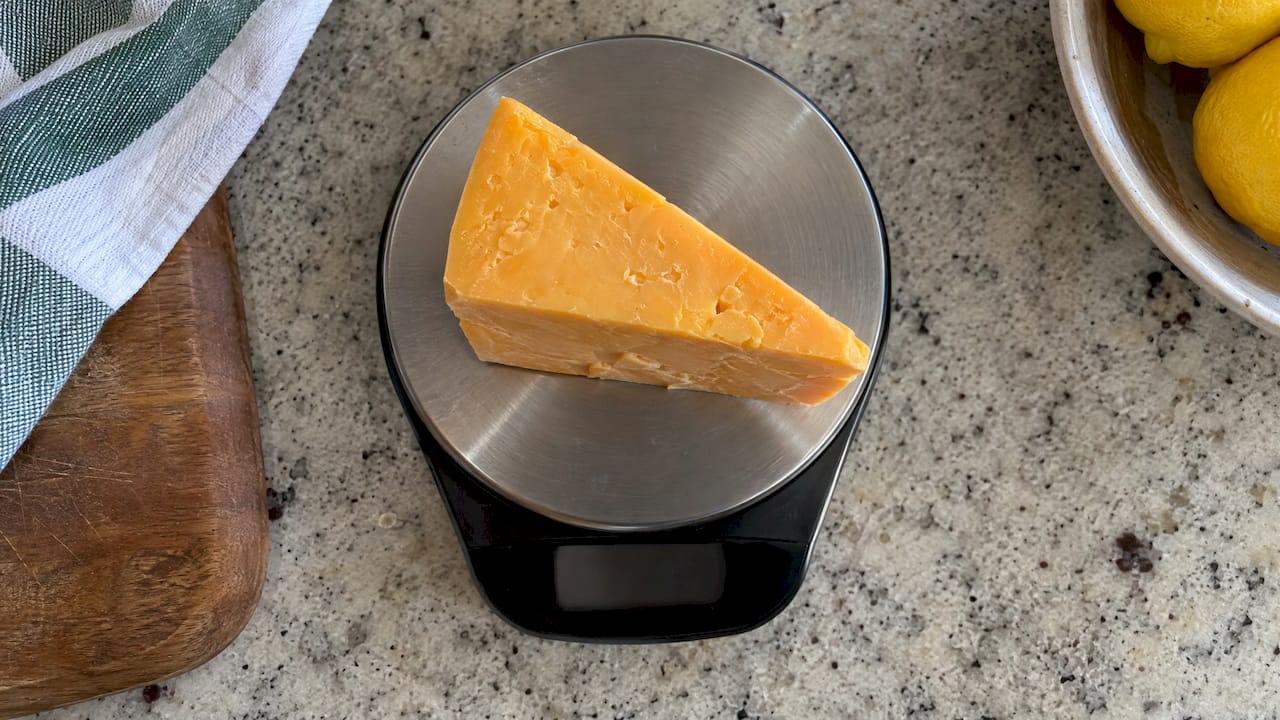
One rule saves a lot of errors: log food in the state you measured it. If you weighed the steak raw, log it raw. If you weighed it cooked, log it cooked.
Using photos without losing accuracy
Photo logging is the fastest way to record a meal, and it suits keto well when you can see what the app assumed. It is also where you should be careful with fat. A study of four photo-based calorie apps, covered by NDTV, compared 102 weighed meals with the apps’ estimates. The apps came in about 250 to 345 calories low on average and about 30 g low on fat. Carbs were estimated more consistently, but high-fat keto meals were harder to judge. The report’s advice: review the estimate, add any missed ingredients and check the portion size.
That is a good routine for any photo log. A photo cannot see butter melted into a sauce or oil soaked into roasted vegetables, so you add them yourself.
Step 4: Build a daily routine that holds up
The best tracking routine is the one you will still follow in week six. Here is a simple one for keto:
- Log the first meal before you eat it. Photograph the plate, or say it out loud if your hands are busy.
- Check the carbs line. On keto, this is the number that matters most. If it is higher than expected, look for sauces, glazes and “sugar free” products.
- Add the fats. Oil, butter, dressing, cheese and nuts get their own entry.
- Glance at your remaining calories at midday. It tells you whether dinner has room for a second helping of the fat-heavy side.
- Review the week, not the day. One heavy day is information, not failure.
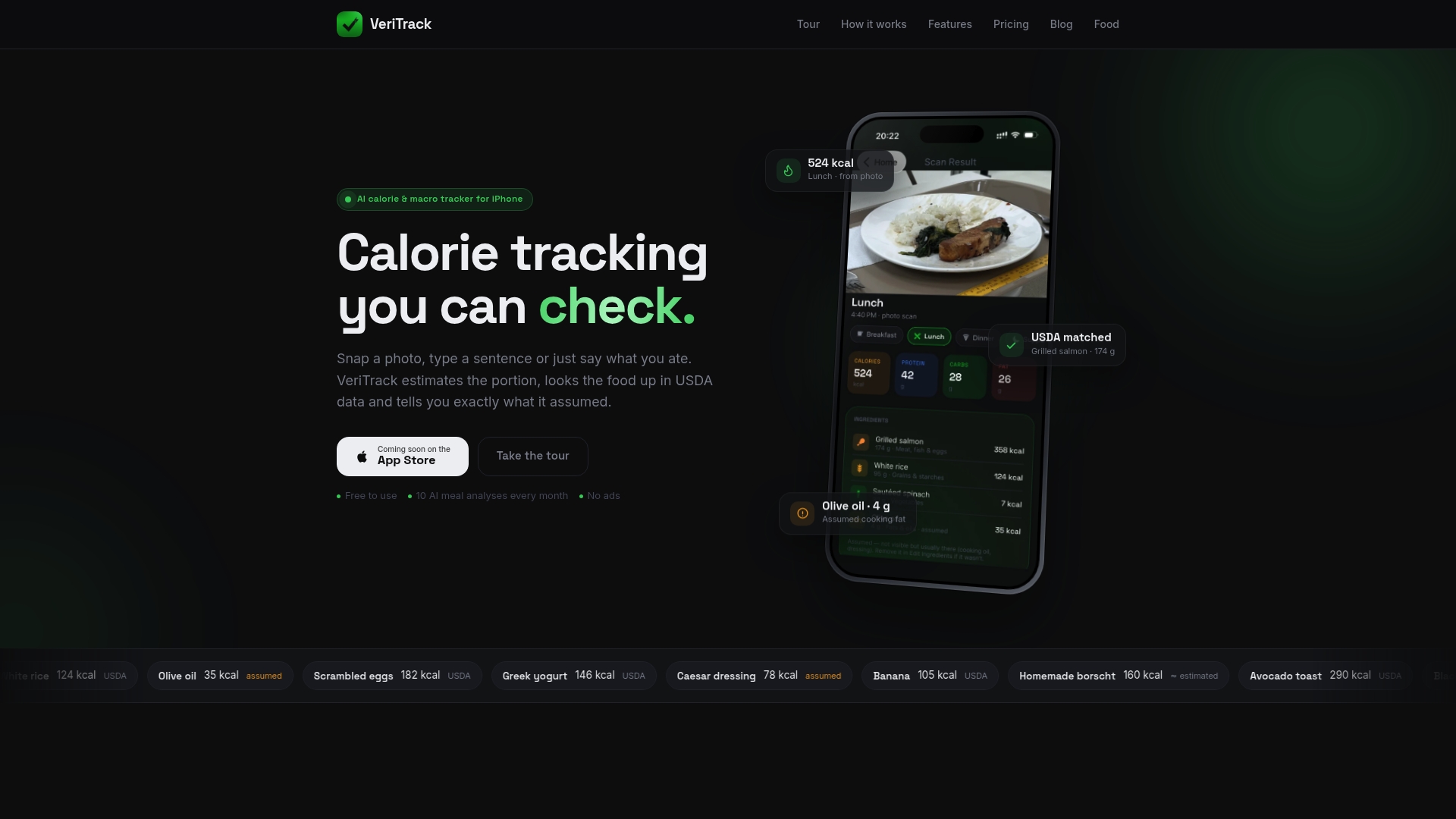
We designed VeriTrack around this rhythm. You can photograph a meal, type a description or use your voice. Portions are estimated using USDA nutrition data, and on supported iPhones, LiDAR measures depth to improve portion sizing. The app shows the assumptions behind each estimate, so you can see what it assumed about the portion and correct it. It also reads from Apple Health (read-only), keeps a daily meal diary and sends gentle reminders.
A diary also makes patterns visible. If your carbs creep up every Thursday, the log shows it. If your weight stalls while your carbs are perfect, the calorie column is the first place to look.
Common keto tracking mistakes
- Skipping the oil. Cooking fat is the most common missing entry, and the densest.
- Trusting the front of the package. Read the Nutrition Facts panel, not the claim.
- Mixing total and net carbs. Choose one method and write it down.
- Logging the wrong state. Raw versus cooked weights give very different numbers.
- Treating the fat target as a goal. It is the room you have, not a quota to fill.
- Chasing perfection. A log that is 90 percent right and done every day beats a perfect log you abandon.
If your weight stalls, check the log before you cut anything. Look for unlogged fat, creeping portions of nuts and cheese, and a target that was set months ago. As your weight changes, so does your calorie need, so update your numbers.
Try it with VeriTrack
VeriTrack is an iPhone calorie and macro tracker. You photograph your meal, type it or say it. It estimates portions using USDA data, uses LiDAR depth on supported iPhones and shows its assumptions, so you can see what went into each number and correct it. The free tier includes a limited number of AI meal analyses each month, and Premium gives you unlimited analyses and the full feature set. You can get VeriTrack on the App Store from our site.
Set your daily target, photograph your next keto meal and add the cooking fat. That first log shows you where your numbers really sit.
Our perspective
Most people who struggle with keto tracking are not careless. They are guessing at the exact things a camera and a database cannot see on their own: the oil in the pan, the size of the spoon, the handful of nuts.
That is why we built VeriTrack to show its work. Every estimate comes with the assumptions behind it, so you can look at a meal and say, “that is not a tablespoon, it is two.” You fix it in seconds, and the log gets better instead of just getting longer.
On keto this matters more than on most diets, because fat is dense and small errors add up quickly. LiDAR depth on supported iPhones gives the portion estimate something real to work from, and the USDA data gives each food a clear source. You stay in charge of the final number.
Our advice: aim for a log that is honest, quick and consistent. Not perfect.
Aliaksei
FAQ
Do you count calories on keto?
It helps to. Keto limits carbs, but weight change still follows energy balance. Calorie-dense keto foods such as nuts, nut butters and cheese can push you into a surplus even when your carbs are in range. Tracking calories alongside carbs shows you which of the two is limiting your progress.
How many carbs can you eat on keto?
A ketogenic plan is usually defined as 20 to 50 grams of carbohydrate per day. Many people start at the low end and adjust. If you have a medical condition or take medication, ask your doctor or registered dietitian to help you set the number.
Are net carbs the same as total carbs?
No. Net carbs are total carbohydrate minus fiber and half of any sugar alcohols. The term is not defined by the FDA, so the label will not list it for you. Read total carbohydrate, fiber and sugar alcohols on the Nutrition Facts panel and do the subtraction yourself.
How do I track keto meals quickly?
Log each meal as you eat it. Use a photo or your voice for the plate, then add cooking fat, sauces and snacks as separate entries. Weigh only the densest foods, such as oils, nut butters and cheese, and estimate the rest.
Why does my keto log not match the scale?
The most common causes are unlogged fats, portions that have crept up and a calorie target that has not been updated as your weight changed. Review a full week of entries before you change your plan.
Sources
- Ketogenic nutrition therapy: Considerations for the women’s health clinician
- Healthy Keto Meal Plan, Mayo Clinic Diet
- Do You Still Have To Count Calories On The Keto Diet? Health Digest
- What are “net carbs”? Tufts Health & Nutrition Letter
- How to Read Nutrition Labels, American Diabetes Association
- How to Calculate Net Carbs, Healthline
- AI Calorie-Tracking Apps Can Miscalculate By 345 calories, NDTV