
How to Track Daily Nutrition: A Practical Guide
Learn how to track daily nutrition: what to log, how to set targets, estimate portions without a scale and review your week, with an easy iPhone routine.
To track daily nutrition, log everything you eat and drink soon after you eat it, match each entry to a realistic portion, compare your totals with a target built for your body and goal, and review the pattern once a week. Consistency matters more than perfection. The hardest part is usually the portion estimate, which is where most logs drift. That is the problem we built VeriTrack to solve: you photograph, type or speak your meal, and the app shows the assumptions behind every number so you can correct them.
This guide walks through the routine step by step, with the places where tracking usually goes wrong.
TL;DR
- Decide what you are tracking first. Calories and protein suit most goals, while a heart-health goal may call for sodium, saturated fat or fiber.
- Log soon after eating, including oils, sauces, drinks and small bites. Prompt records are more accurate than memory at the end of the day.
- Treat your daily target as a starting estimate. Adjust it using your weight trend, hunger and how well you can stick to it.
- Review the diary once a week and change one small thing at a time.
- Start with two or three days a week if daily tracking feels like too much, then build up.
Table of Contents
- Start with the goal, not the app
- What to record every day
- Log soon after you eat
- Estimate portions without a scale
- Raw, cooked and recipes
- Set a daily target that fits you
- Review your week, then change one thing
- Keep it quick and sustainable
- Where VeriTrack fits
- Our perspective
- FAQ
- Sources
Start with the goal, not the app
Before you log a single meal, decide what the diary is for. The American Heart Association recommends matching the details you record to your goal. That one decision shapes everything else:
- Weight loss or maintenance: calories and portion sizes matter most.
- Muscle gain or body recomposition: calories plus protein, carbohydrate and fat.
- Heart health: sodium, saturated fat and fiber may deserve a column of their own.
- Building a habit: a single food group, such as fruit and vegetables, can be enough. HealthLink BC notes that a food journal can follow one selected food group rather than every nutrient at once.
If you want a structured way to phrase the goal, the SMART method is useful. Concordia University’s nutrition guide says a goal should be specific, measurable, actionable, relevant and time-bound. “Eat more protein” is vague. “Reach my protein target on five days this week” is a goal you can check on Sunday.
If you are tracking for a medical condition, such as diabetes, kidney disease or a heart condition, ask your doctor or a registered dietitian which numbers to watch and what targets to use.
What to record every day
The basic entry is simple. The CDC’s optional food log asks for the date, the time, the item, the amount and the calories for everything you eat and drink. That is the core of any diary, on paper or on a phone.
You can add context if it helps explain your patterns. The American Heart Association suggests noting things like activity, feelings while eating, and hunger or fullness. HealthLink BC also suggests the eating environment and your thoughts or emotions when they relate to your goal. A note like “ate at my desk, rushed” is often more revealing after two weeks than any single calorie figure.
Here is a practical daily checklist:
- Meals, snacks and small bites.
- Drinks, including anything with calories.
- Cooking oil, butter, dressings, sauces and creamers.
- Portion size for each item.
- Time of day.
- Optional: hunger level and a one-line note on context.
Log soon after you eat
The single best habit is logging right after the meal. HealthLink BC says to record what, when and how much you eat and drink, ideally immediately afterward, because prompt records are more accurate.
Busy day? Healthline suggests jotting a brief note after eating and adding it to the log later that same day. A splash of oil, a handful of nuts and a second helping all disappear from memory by evening, so even a rough note beats a blank.
The items people forget
University Hospitals advises including cooking oils, butter, dressings, sauces, creamers, alcohol and other liquid calories. These small additions are where logs most often fall short of reality. A tablespoon of oil in the pan or a latte with flavored syrup can add up over a week, and they rarely look like a “meal” when you think back.

Logging when you are short on time
This is where an iPhone app earns its place. With VeriTrack you can photograph a meal, type a description or use a voice command, so a log entry takes a few seconds instead of a minute of searching. If you eat the same breakfast most days, the same quick entry works every morning. Our guide to tracking calories on iPhone covers the everyday workflow in more detail.
Estimate portions without a scale
Portion size is the weakest link in most food logs. A scale is the most precise tool, but you will not always have one: at a restaurant, at work, at a friend’s table.
HealthLink BC recommends household measures such as cups and teaspoons, and, when those are not available, comparing portions with your hand or common objects. Its examples include a fist for a serving of salad and two tennis balls for rice. These comparisons are rough, but they are far better than guessing a single number with no reference.
A few habits make estimates better:
- Pick one reference and stay with it. Using the same hand comparisons every time keeps your errors consistent, so your trend stays meaningful.
- Measure a few staples once. Scoop your usual bowl of cereal or serving of rice into a measuring cup one time, then you know what it looks like.
- Do not skip the meal because you cannot measure it. A rough entry keeps the diary complete.
If you want to see how much precision you really need, our piece on food scale accuracy looks at how close is close enough, and our portion control guide shows how to build portion awareness for weight loss.
How VeriTrack handles portions
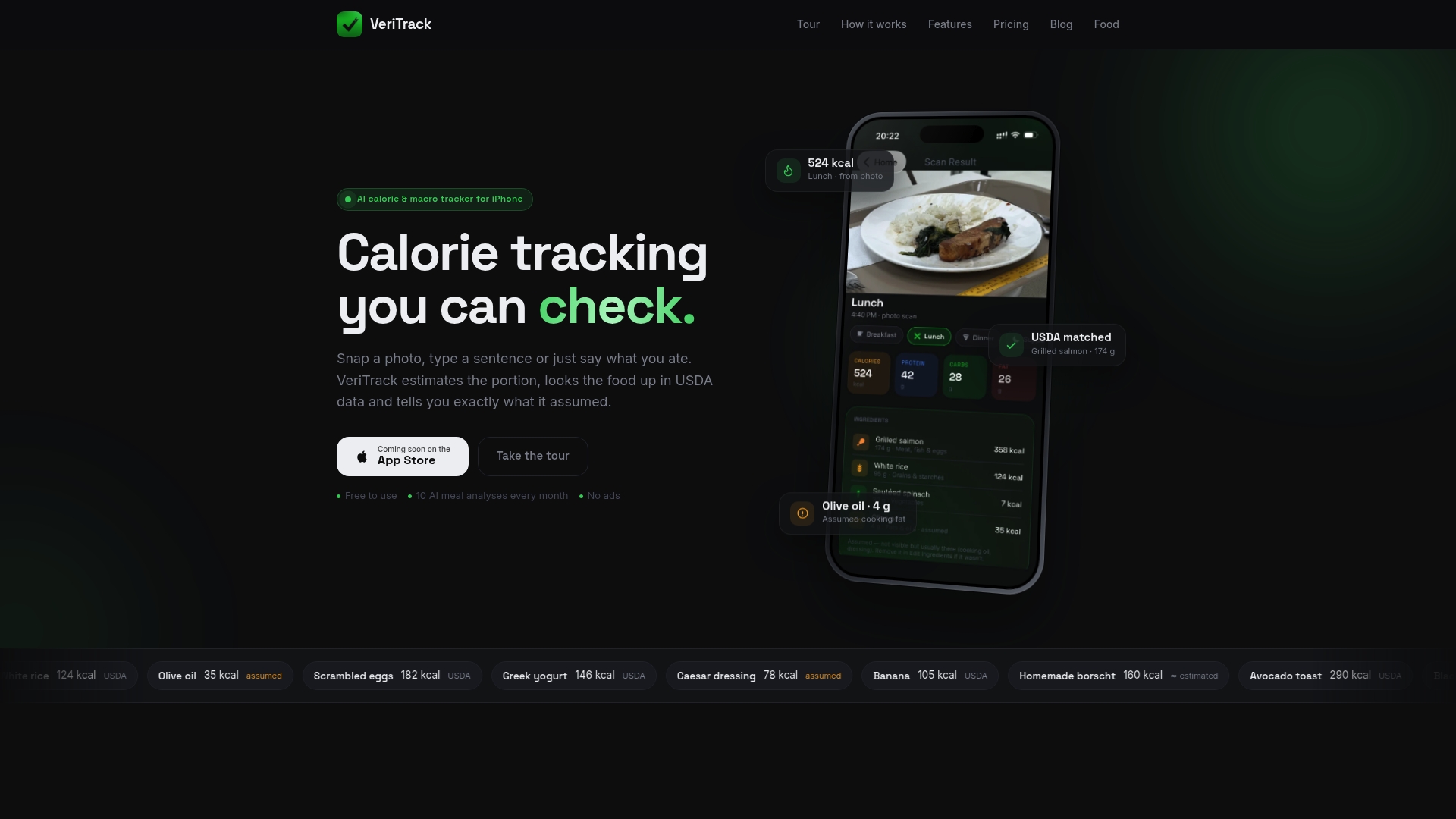
VeriTrack estimates portions from your photo and, on supported iPhones, uses LiDAR (the depth sensor built into some iPhone models) to measure how much food is on the plate. Nutrition values come from USDA data. The app also lists the assumptions behind its estimate, such as the portion size it inferred, so you can see what it thinks it is looking at. If something is off, say it assumed a smaller serving than you ate, you correct it, and the totals update.
Raw, cooked and recipes
One common error is choosing the wrong database entry. A food weighs differently raw and cooked, because cooking changes water content. The rule is simple: match the entry to the state in which you measured the food. If you weighed rice or chicken raw, use the raw entry. If you weighed it cooked, use the cooked entry. Mixing the two can shift your numbers noticeably, so decide on one habit and keep it.
For home-cooked dishes, list the ingredients and seasonings, including the oil. If you cook a big pot of something and eat part of it, estimate your share of the pot rather than treating the whole recipe as one serving.
Set a daily target that fits you
A target gives your totals meaning. Without one, a number like 1,850 kcal tells you nothing. Most apps calculate a starting target from your age, height, weight, sex and activity level, and University Hospitals describes the same inputs for setting calorie and macronutrient targets.
VeriTrack sets a daily nutritional target based on your body and your activity level, so you begin with a figure that reflects you rather than a generic number. If you use an Apple Watch or other activity source, VeriTrack can read data from Apple Health (read-only), which keeps your activity context in one place.
Treat the number as a starting point
No calculator knows your metabolism exactly. Use the first two to four weeks as a test. If your weight trend moves the way you want, keep going. If it stalls, or you are constantly hungry, adjust a little. Activity estimates from wearables are also estimates, and treating calorie burn as a trend rather than an exact figure is a sensible way to use them.
If you are after a specific protein figure, see our guide to protein intake tracking. If you are working on body composition, body recomposition macros explains how to set and track them.
Review your week, then change one thing
A diary only helps if you look at it. The American Heart Association recommends reviewing the diary at the end of each week, comparing it with your goal and looking for patterns or triggers that get in the way. Then start small. One example it gives is preparing a healthy snack in advance.
A simple weekly review takes ten minutes:
- Check your averages. How close were your calories and protein to target across the week, not just on one day?
- Spot the pattern. Are weekends different from weekdays? Do late-night snacks follow late meetings?
- Pick one change. Pre-portion a snack, add a protein source to breakfast, or swap a sugary drink.
- Look at the trend. The CDC says monitoring diet, activity and weight can help you maintain progress and reveal trends, and its guidance includes recording weight weekly.
A worked example: say your target is 2,000 kcal and 120 g of protein. Over a week you average 2,250 kcal and 95 g of protein, with most of the surplus coming from Saturday and Sunday dinners. The change is not “eat less”. It is “add a protein-rich breakfast on weekdays and plan one lighter lunch on weekends”. Small, specific and easy to repeat.
Keep it quick and sustainable
Tracking should not feel like a second job. University Hospitals suggests starting slowly by tracking two or three days a week, using reminders, pre-logging meals, and saving frequent meals or custom recipes so later entries are faster.
The point is steady information, not a flawless record. We cover this idea in why calorie tracking works even when you do not do it perfectly. A log that is 90 percent complete and honest about its uncertainty is more useful than a perfect log you abandon in week two.
Here is a routine many busy people can keep:
- Morning: log breakfast with a photo or a voice note.
- Midday: log lunch right after eating, before you go back to work.
- Evening: log dinner and add anything you forgot, such as the drink or the snack.
- Once a week: review, adjust one thing, and record your weight if weight is part of your goal.
If you want more on building the habit itself, read our guide to keeping a food diary.
Where VeriTrack fits
VeriTrack is an iPhone app for calorie and macro tracking. You can log a meal with a photo, typed text or your voice, and the app looks up nutrition from USDA data. Because it shows the assumptions behind every estimate, you can see what was measured and what was guessed, and correct it. Other features that support the routine above:
- Personalized daily targets based on your body and activity level.
- A daily meal diary and progress tracking.
- Read-only Apple Health integration.
- Gentle reminders that keep you on track without nagging.
There is a free tier with a limited number of AI meal analyses per month, and a premium plan for unlimited analyses and full features, purchased through the App Store. You can see both on veritrack.app.
If you want a log you can check rather than just trust, start with your next meal: take a photo, look at the assumptions, fix anything that is off, and let the day add up.
Our perspective
Most people do not quit tracking because they lack discipline. They quit because the numbers feel like a black box. You log a bowl of pasta, the app gives you one figure, and you have no idea whether it assumed a small serving or a large one.
We built VeriTrack around a different idea: show the work. When the app estimates a portion from a photo, with LiDAR depth on supported iPhones, it also shows the assumptions it made. You can agree with them or correct them. That makes the log yours, and it makes the totals easier to trust.
We also think tracking should be gentle. Your goal is a clear picture of your eating over weeks, not a perfect score every day. A quick photo, a sensible target and a weekly look at the trend will do more for you than a strict routine you cannot keep.
Aliaksei
FAQ
How do I track my daily nutrition if I eat out a lot?
Log the meal right after you eat, while you still remember what was on the plate. Photograph it, note the sauces and oils, and compare the portions with your hand or a familiar object. VeriTrack lets you photograph the meal, see its assumptions and correct them, so restaurant meals do not have to be left out of the diary.
Do I have to track every day?
No. University Hospitals suggests starting with two or three days a week, and that can be enough to learn your patterns. Many people then extend to daily tracking once logging feels automatic. A short, consistent habit beats a long one you drop.
Which nutrients should I track?
That depends on your goal. For weight management, calories and portions are the base, and for training goals, protein, carbohydrate and fat are common additions. For heart health, the American Heart Association mentions nutrients such as sodium, saturated fat and fiber. If you have a medical condition, ask your doctor or dietitian which ones apply to you.
Should I weigh my food raw or cooked?
Either works, as long as the database entry matches how you weighed it. A raw weight needs a raw entry and a cooked weight needs a cooked entry. Pick one method for each food and use it consistently so your totals stay comparable from week to week.
Sources
- American Heart Association: Keeping a Food Diary
- CDC: Food Log (Optional)
- HealthLink BC: Food journaling
- Concordia University: How to set a SMART nutrition goal
- Healthline: How To Keep a Food Journal
- University Hospitals: Getting the Most Out of Your Meal Tracker
- CDC: Tips for Keeping Weight Off